

The Camera Sees Everything — Including Bad Print Quality
Film and television production moves fast. Tight schedules, shifting scripts, last-minute set changes — it's an industry built on controlled chaos. And somewhere in that chaos, somebody needs signage. Storefronts for a period drama. Hospital corridors for a medical thriller. Campaign posters for a political series. The graphics that dress a set are what make a fabricated world feel real.
We've worked with production companies filming in and around Atlanta for years, and one thing we've learned is that set graphics have a unique set of demands. What works for a retail storefront or a trade show booth doesn't always translate to a film set. Here's what production teams should know before they place that order.
Timelines Are Compressed — Plan for It
In commercial signage, a two-week turnaround is standard. In film production, you might need a fully dressed storefront by Thursday and it's already Monday. Compressed timelines are the norm, not the exception.
The best way to handle this is communication. The earlier a production team can get us reference images, dimensions, and context for how the graphics will be used on set, the faster we can move. Even rough sketches and approximate measurements help us start prepping materials and allocating press time before final artwork is locked in.
We also keep popular substrates in stock specifically because we know production schedules don't wait. Having material on hand means we can go straight to print the moment files are approved, rather than waiting on a supply order.
On-Camera Color Is a Different Game
Color accuracy matters for any print job, but set graphics add another layer of complexity. The final product isn't being viewed in person under natural light — it's being captured by a camera under controlled (and sometimes very specific) lighting conditions.
Fluorescent greens and blues can cause issues with green screen work. Highly reflective materials can create glare that ruins a shot. Overly saturated colors can look unnatural on camera, while colors that look great in person might wash out under studio lighting.
This is why we always ask about the lighting environment and camera setup when a production team places an order. Matte finishes are usually safer than gloss for on-camera work. And if the art department has done camera tests with color swatches, that information is gold — it lets us dial in the output to match what the director of photography actually needs on screen.
Durability vs. Disposability
Here's where set graphics diverge sharply from traditional signage. A permanent business sign needs to look good for years. A set graphic might need to look perfect for three days of shooting and then get tossed in a dumpster.
That distinction matters because it directly affects material selection and cost. There's no reason to print a diner menu board on premium aluminum composite if it's only appearing in two scenes. A foam board print or lightweight coroplast panel will look identical on camera and cost a fraction of the price.
On the other hand, if a set piece is going to be used across multiple episodes or reappears throughout a season, it makes sense to invest in more durable materials that can handle repeated setup, transport, and storage without showing wear.
We help production teams make that call based on how the piece will be used. The goal is always to look great on camera without overspending on materials that outlast their usefulness.
Scale and Viewing Distance Change Everything
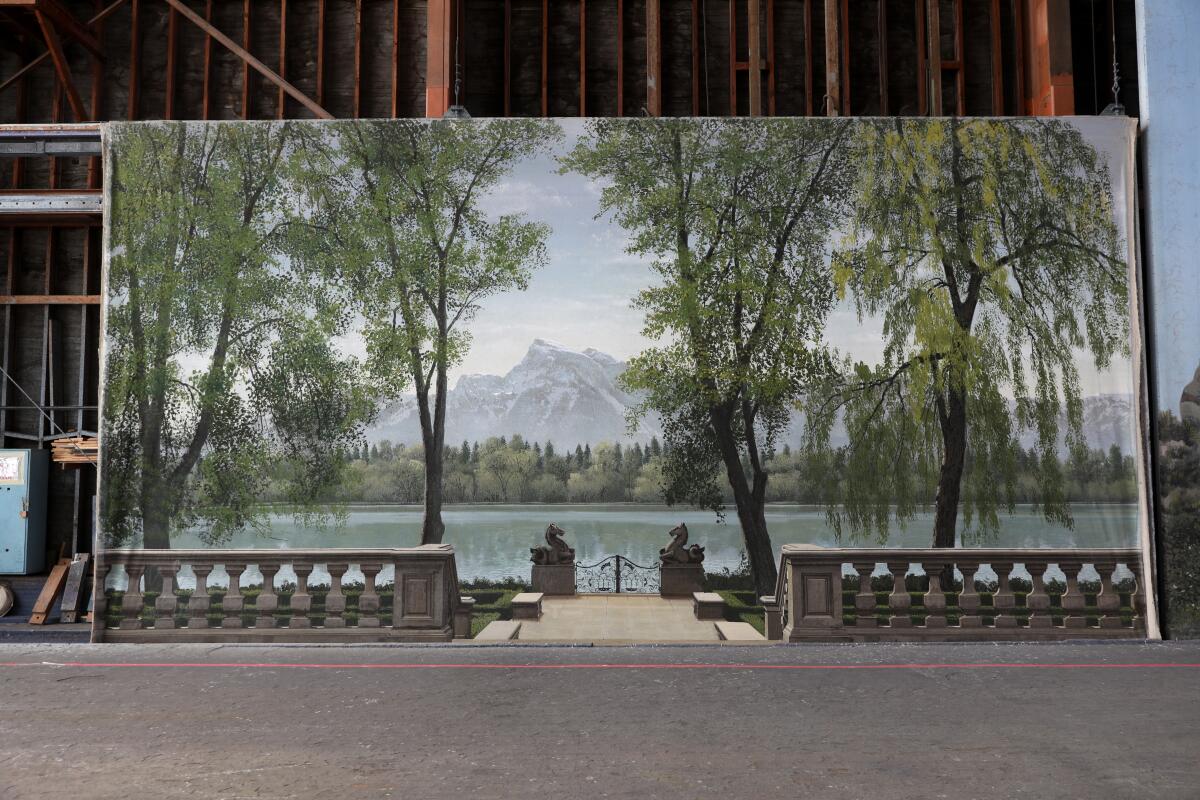
A billboard-sized backdrop for an exterior shot has very different resolution requirements than a close-up insert of a newspaper headline. Understanding how a graphic will be framed on camera is critical for determining print resolution, text sizing, and material choice.
For wide establishing shots, we can print at lower resolutions on larger format materials because the camera never gets close enough to reveal the detail. This saves time and cost on massive pieces. For hero props — items the camera will linger on in close-up — we push resolution to the maximum and pay extra attention to color matching and surface finish.
The art department usually knows which pieces are background dressing and which ones will be featured, and that information shapes how we approach every element of the job.
Removable Installation Is Usually a Must
Unlike permanent signage, set graphics almost always need to come down without a trace. Whether it's a rented location that needs to be restored to its original state or a set that will be redressed for a different scene, clean removal is non-negotiable.
We use repositionable adhesive vinyl, temporary mounting solutions, and removable tapes specifically for this purpose. The adhesive needs to hold securely during shooting — nothing kills a take like a sign peeling off the wall mid-scene — but it also needs to release cleanly when the crew wraps.
For exterior applications, we factor in weather exposure during the shoot window. Even a temporary installation needs to survive whatever Atlanta's weather throws at it during production days.
Period Accuracy Takes Extra Effort
Period pieces are some of the most rewarding and challenging set graphic work we do. A 1970s gas station needs signage that looks authentically weathered and era-appropriate. A 1940s storefront can't have modern fonts or design sensibilities.
This often means working closely with the art department to age prints after production — distressing edges, adding faux patina, adjusting color tones to match the era. Sometimes it means printing on specific materials that mimic the look and feel of older signage technology. Metal-look substrates, wood-textured panels, and intentionally muted color palettes all play a role.
The details matter because audiences notice when something feels off, even if they can't pinpoint why. A modern-looking sign in a period scene breaks the illusion instantly.
Working With Atlanta's Film Industry
Atlanta has become one of the biggest film production hubs in the country, and that means a steady demand for high-quality set graphics from production teams who know exactly what they need. We've built our workflow to match the pace and precision this industry requires.
If your production is filming in the Atlanta area and you need set graphics — from massive backdrops to detailed hero props — the key is getting us involved early. The more context we have about the shoot, the better we can deliver graphics that look right on camera, stay on budget, and arrive on time.
Ready to Get Started?
Contact Extreme Color today for vehicle wraps, signs, banners, and more.
Get a Free Quote