

The Biggest Buildings in Atlanta Have the Worst Signage
Walk into a typical warehouse off Fulton Industrial Boulevard and you will find hundreds of thousands of square feet, dozens of dock doors, forklifts moving in every direction, and signage that amounts to a few faded placards and some hand-taped paper. For buildings where people and machinery share space all day, that is a real problem.
Metro Atlanta is one of the busiest distribution markets in the country. The corridors along I-20 West, the airport logistics cluster around Hapeville and Forest Park, and the industrial parks up I-85 toward Doraville and Norcross are full of facilities that run hard every shift. Good signage in these buildings is not decoration. It is how a facility moves faster and stays safer.
Wayfinding: The Fastest Productivity Upgrade in the Building
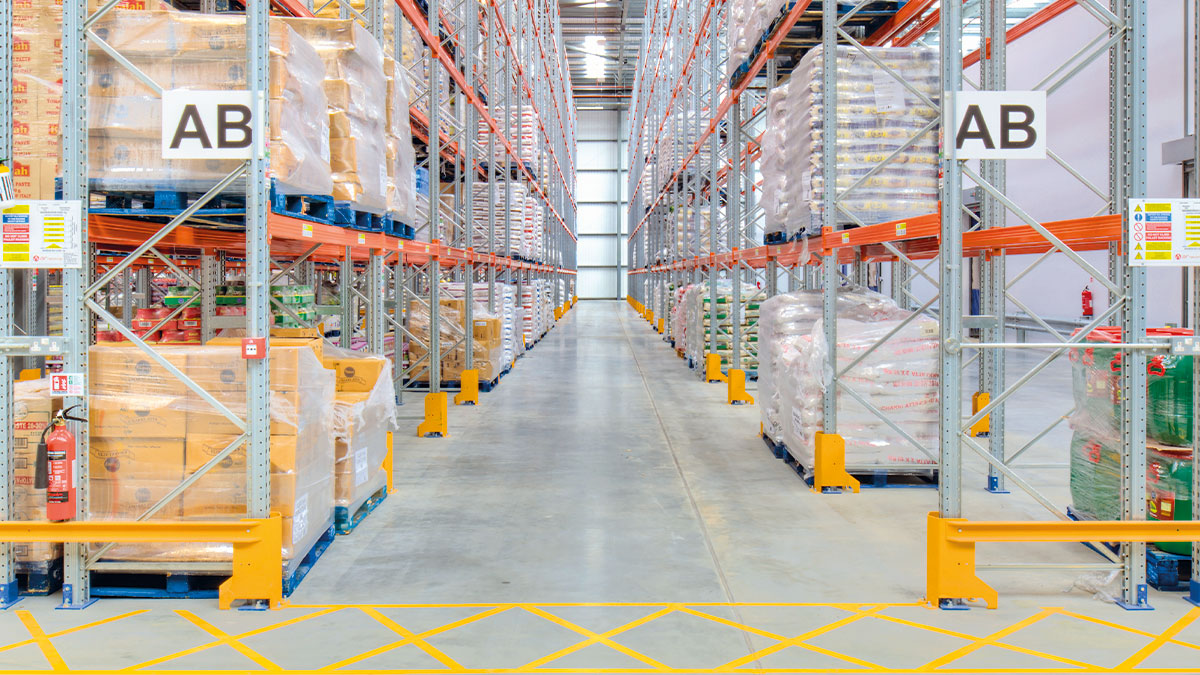
Every minute a picker, a driver, or a temp worker spends figuring out where they are is a minute the facility pays for. Warehouse wayfinding starts with big, readable aisle and bay identification: hanging signs at the end of every aisle, rack labels at every level, and zone markers visible from a forklift seat halfway across the building.
Size and contrast do the work here. A sign that reads fine from ten feet away is useless in a building where sight lines run three hundred feet. We print aisle markers large, with bold characters on high-contrast backgrounds, because the person reading them is often moving and far away.
Seasonal staffing makes this matter even more. Every peak season, Atlanta warehouses bring in workers who have never seen the building before. Clear overhead wayfinding shortens their learning curve from weeks to days.
Safety Signage: Where Print Meets Protection
Forklift traffic lanes, pedestrian walkways, PPE requirements, dock edge warnings, charging areas, and clearance heights all need to be communicated where the hazard actually is. Safety signage works when it is consistent, visible, and physically durable enough to survive the environment.
Warehouses are brutal on print. Dust, forklift exhaust, pressure washing, and the occasional direct hit from a pallet will destroy lightweight materials quickly. This is a place for rigid substrates, laminated faces, and mounting that keeps signs out of the impact zone. A safety sign that has fallen off the wall is worse than none at all, because it signals that the rules are optional.
Floor graphics belong in this conversation too. Printed floor markings can define pedestrian lanes, mark keep-clear zones at dock doors, and put arrows exactly where feet and forklifts meet. On a warehouse floor, the message underfoot is often the one that gets seen.
The Exterior: Docks, Gates, and Drivers Who Have Never Been There
The signage problem starts before anyone enters the building. Trucks arrive all day driven by people who have never seen the property. Without clear exterior signage, they idle at the wrong gate, block the yard, and burn dock appointments.
Exterior warehouse signage means large dock door numbers readable from across the yard, gate and entrance identification, directional signs that route trucks versus visitors versus employees, and staging area markers. Banner material and rigid panels both work outdoors when they are produced for UV and weather, which matters through a full Georgia summer.
If your facility sits in a row of identical tilt-up buildings, and most of Atlanta's industrial stock does, building identification is the first fix. A driver looking for you should find you from the street, not from a phone call to your office.
Branding the Box: Culture Walls and Client Tours
Warehouses are workplaces, and increasingly they are also showplaces. Operations teams walk clients and prospects through their facilities, and a building with crisp branding reads as a well-run operation. Large wall graphics with your logo and values, printed murals in break rooms, and branded graphics in the office-to-floor transition areas change how a facility feels to the people who work there every shift.
This does not require wrapping the whole building. A few large-format graphics at the entrance, on the main interior wall, and in the break room go a long way. Wide open wall space is the one thing every warehouse has plenty of.
Materials That Survive the Environment
The right material depends on where the sign lives. Hanging aisle signs need to be light enough to suspend safely but rigid enough to stay flat. Wall-mounted safety signage wants a rigid substrate with a laminate that stands up to cleaning. Floor graphics need slip-rated laminates built for industrial traffic. Exterior pieces need UV-stable inks and materials that handle heat, rain, and the temperature swings of an Atlanta year.
This is where working with a large format printer pays off over ordering generic signs from a catalog. Catalog signs come in catalog sizes with catalog messages. A printed program is built to your building: your rack heights, your sight lines, your traffic flow, your brand.
The Takeaway
Walk your facility like a first-day temp worker and a first-time truck driver. Anywhere you would hesitate, you need a sign. Prioritize aisle and dock identification first, safety messaging second, and branding third, then choose materials rated for the actual conditions of each location. A signage package planned as one program keeps everything consistent and readable across the whole operation.
We produce warehouse and industrial signage for facilities across metro Atlanta, from single-building operations to multi-site logistics companies. If your building has grown past its signage, we can help you plan a package that keeps people moving in the right direction.
Ready to Get Started?
Contact Extreme Color today for vehicle wraps, signs, banners, and more.
Get a Free Quote