

Why So Many Atlanta Storefronts Get Window Graphics Wrong
Drive down Howell Mill Road, Memorial Drive, or anywhere along the BeltLine and you'll see the same mistake repeated in dozens of storefronts: window graphics that look cheap, peel at the corners, or block the view into a shop that depends on people seeing in. Window space is some of the most valuable real estate a brick-and-mortar business has, and most retailers are using it badly.
We work with retail clients across the metro — boutique shops in Virginia-Highland, restaurants in Decatur, salons in Sandy Springs — and the same conversations come up. They want their windows to do more, but they're worried about damaging the glass, locking themselves into permanent decisions, or getting stuck with graphics that look dated in six months. The good news: modern vinyl solves all of that.
Vinyl Lettering vs. Perforated Film vs. Static Cling
Three product categories handle most storefront window work, and each has its place.
Cut vinyl lettering is the gold standard for permanent or long-term storefront identification. Hours of operation, business name, phone number, that "we accept" line of credit card logos — all of these are typically cut vinyl applied directly to the glass. It removes cleanly with heat and adhesive remover when needed and lasts for years outdoors.
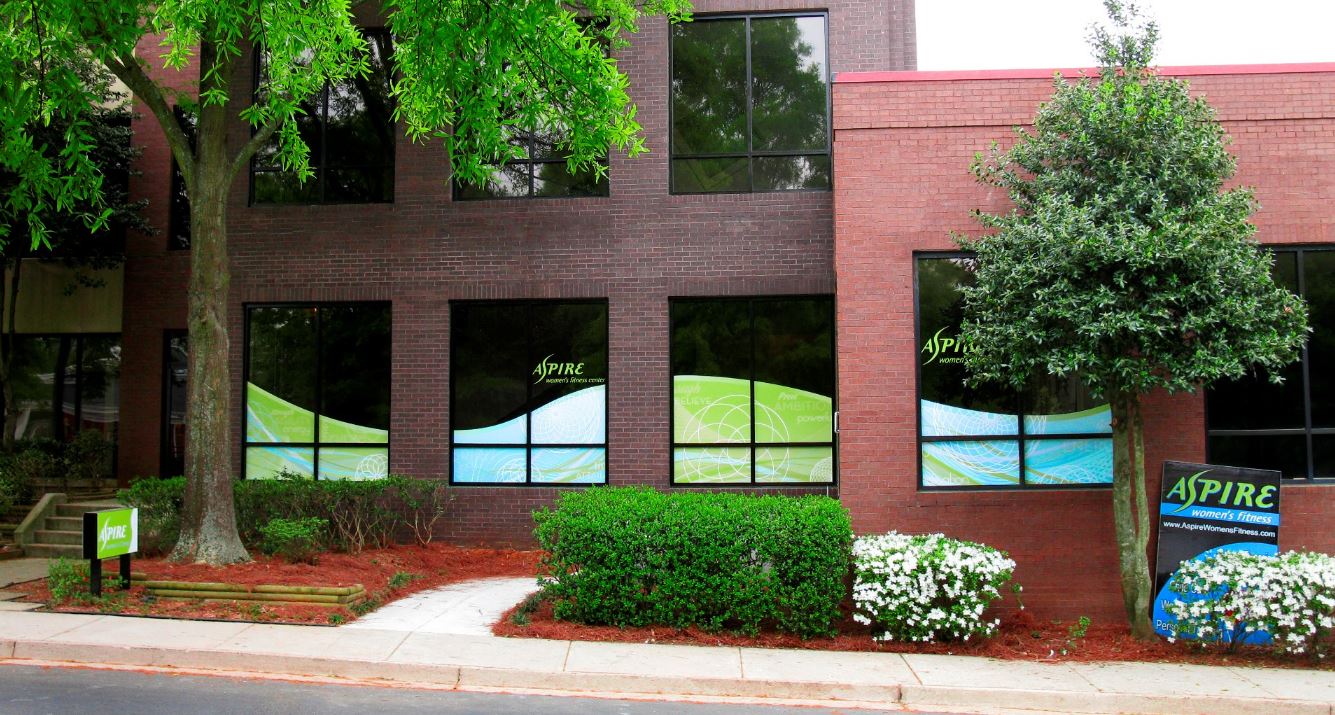
Perforated window film — sometimes called see-through vinyl or one-way vision film — is what you want when you're covering large window areas with full-color graphics but still need natural light and visibility from inside. The film has tiny holes that let people inside see out while the printed image faces outward. We use this for restaurant menu graphics, large promotional images, and full-window brand wraps.
Static cling and removable adhesive vinyl are the right answer for short-term promotions. Holiday sales, grand openings, weekend events. These come off cleanly with no residue and don't ask the retailer to commit to anything beyond the campaign.
The Damage Question
The biggest reservation we hear from Atlanta retailers — especially those in leased spaces — is whether window vinyl damages the glass. The honest answer is that properly applied vinyl, properly removed, leaves clean glass. We've removed graphics from windows that were installed years prior with no residue and no damage.
The problems come from three sources. Cheap vinyl with low-grade adhesive can leave residue, especially after exposure to direct Atlanta summer sun. Unprofessional installation can trap dirt or moisture under the vinyl, which etches the glass over time. And graphics that get left up too far past their useful life become harder to remove cleanly.
For retailers worried about lease compliance, we recommend specifying high-quality vinyl with a known removability rating from the start. The cost difference is small. The peace of mind is worth it.
Reading Distances and Letter Heights
Window letter sizing is one of the easiest things to get wrong. Most storefronts under-size their primary lettering and over-size their secondary text.
For storefronts in walkable areas — Inman Park, Krog Street Market, Edgewood Avenue — your primary lettering needs to be readable from across the street. That's typically 6 to 12 inches tall for a single line of text. Hours and secondary information can drop to 2 to 4 inches.
For storefronts in drive-by retail strips along Buford Highway or Cobb Parkway, your primary lettering needs to read from a moving car at 35 to 45 mph. That pushes letter heights up to 12 to 18 inches and demands cleaner, simpler typography.
Seasonal and Promotional Updates
The retailers who get the most out of their windows treat them like a campaign surface, not a static decoration. We have boutique clients who change their window vinyl four to six times a year — back-to-school, holiday, Valentine's, spring, summer — using removable film over a permanent base of cut vinyl identification.
This works because the layers are intentional. The permanent cut vinyl handles the things that don't change: name, hours, brand. The seasonal removable film handles what does change: featured products, sales, new collections. Removing and replacing the seasonal layer doesn't touch the permanent layer underneath.
Working With Existing Storefront Constraints
Every Atlanta storefront has constraints. Some have tenant signage rules from the property owner. Some have city ordinances about how much window coverage is allowed. Some have HOA restrictions in mixed-use buildings. We work through these with retailers during the design phase, not after the print is sitting in the shop.
One we run into often: BeltLine-adjacent commercial spaces sometimes have design review processes for storefront changes. The standards vary by stretch and jurisdiction. Knowing this upfront saves a retailer from designing graphics that won't get approved.
Practical Next Steps
If your Atlanta storefront windows aren't pulling their weight, three things are usually wrong: the lettering is too small for the reading distance, the graphics are out of date for the season, or the install is showing its age. None of these are expensive to fix.
Start by walking past your own storefront from across the street, then from a moving car if you're on a drive-by retail strip. What can you actually read? What looks tired? What hasn't changed in two years? That's your project. Window space is too valuable to leave on autopilot.
Ready to Get Started?
Contact Extreme Color today for vehicle wraps, signs, banners, and more.
Get a Free Quote