

You've Got an Event Coming Up — Now What Do You Put on the Floor?
You've booked your booth at the Georgia World Congress Center, or maybe you're setting up for a grand opening on Peachtree Street. Either way, you need signage that looks professional, travels well, and actually gets people to stop and pay attention. The question most businesses get stuck on: retractable banner stands or rigid signs?
It's not a one-size-fits-all answer. Each option has real advantages depending on your situation, your space, and how often you'll be using them. Let's break it down so you can make the right call.
Retractable Banner Stands: The Portable Workhorse
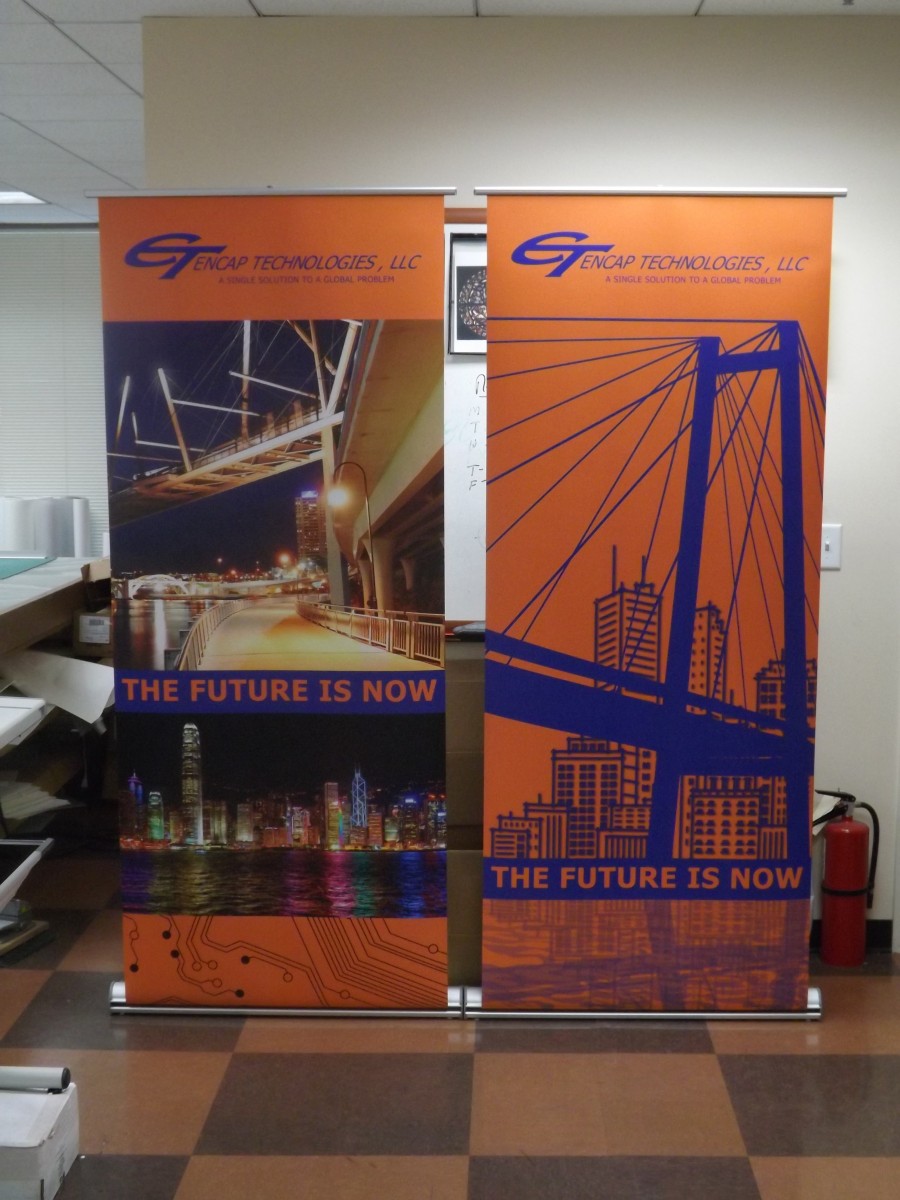
Retractable banners — sometimes called roll-up banners or pull-up displays — are the go-to for businesses that attend multiple events throughout the year. The printed graphic rolls up inside a metal base, and when you need it, you pull it up and lock it into a support pole. Setup takes about 30 seconds. No tools, no hardware, no guesswork.
For Atlanta businesses that hit events regularly — from conferences at the Cobb Galleria Centre to community events in Piedmont Park — that portability matters. You can fit most retractable banners in a carrying case that's about the size of a golf bag. Throw it in the back of your car and you're set.
The print quality on retractable banners has come a long way. Modern large format printing produces vibrant, high-resolution graphics on materials designed specifically for these stands. You get crisp text, accurate brand colors, and a professional look that doesn't scream "budget option."
Where retractable banners shine: indoor events, trade show booths, lobbies, retail promotions, and anywhere you need to set up and tear down quickly. They're also great for businesses that rotate messaging — you can order new graphics and swap them into the same hardware.
Rigid Signs: When You Need Something That Stands Its Ground
Rigid signs — printed on materials like foam board, PVC, aluminum composite, or acrylic — bring a different kind of presence. They feel more substantial. There's a weight and stiffness to them that communicates permanence, even when they're temporary.
If you're setting up a step-and-repeat backdrop for a corporate event in Buckhead, or creating directional signage for a fundraiser at the Fox Theatre, rigid signs deliver a polished, high-end look that's hard to beat. They can be mounted on easels, hung from structures, or placed on tabletop stands.
Rigid signs also handle outdoor conditions better than most retractable banners. A foam board sign won't hold up in a downpour, but an aluminum composite panel will shrug off wind and rain at an outdoor festival in Atlantic Station or a sidewalk sale in Virginia-Highland.
The tradeoff is logistics. Rigid signs don't fold, roll, or collapse. You need to plan for transport and storage, especially for larger formats. A 4x8-foot rigid sign requires a truck or van — it's not fitting in a sedan.
Matching the Display to the Situation
Here's how we typically guide our clients through the decision. If you're doing more than three events a year and your messaging stays relatively consistent, retractable banners are usually the smarter investment. You'll save on production costs over time since you can reuse the hardware and just refresh the graphics when your branding evolves.
If you're doing a one-time event and want maximum visual impact — especially outdoors — rigid signs are often the better choice. They photograph well, they handle environmental stress better, and they give you more options for custom shapes and mounting.
For larger booth setups at venues like the Georgia International Convention Center, many businesses use both. Retractable banners for the quick-deploy elements — flanking a table, marking an entrance — and rigid signs for feature walls, product displays, or branded photo opportunities.
Size, Material, and Finish: The Details That Matter
Retractable banners typically come in standard widths — 33 inches and 36 inches are the most common — and stand about 80 inches tall. That's a good size for eye-level messaging. Premium models offer wider formats up to 60 inches for more dramatic impact.
For rigid signs, you've got more flexibility on dimensions and materials. Lightweight foam board works for indoor events where the sign won't be handled much. Sintra (expanded PVC) is more durable and still reasonably light. For signs that need to last through multiple uses or outdoor conditions, aluminum composite panels are the standard.
Finish matters too. Matte finishes reduce glare under event lighting — important if you're in a convention hall with overhead fluorescents. Gloss finishes pop with color but can create reflections in photos. We usually recommend matte or satin for most event applications.
Don't Forget the Design Fundamentals
Regardless of which format you choose, the same design principles apply. Keep text large enough to read from at least 6 feet away. Stick to your brand colors — this isn't the place to experiment. And leave breathing room in your layout. A sign crammed with text is a sign nobody reads.
For retractable banners specifically, keep your most important messaging in the top two-thirds of the graphic. The bottom third often gets blocked by the base unit, a tablecloth, or foot traffic. Lead with your logo and value proposition up high where eyes land first.
Getting It Done Right for Your Next Atlanta Event
Whether you're exhibiting at AmericasMart, hosting a launch event in Midtown, or setting up a pop-up in Ponce City Market, the right signage makes the difference between blending in and standing out. We produce both retractable banners and rigid signs in-house, which means we can help you decide, design, and deliver without bouncing between vendors.
The best time to start planning event signage is now — not the week before. Give yourself time to get the design right, proof the colors, and make sure everything fits your space. Walk into your next event knowing your signage is working as hard as you are.
Ready to Get Started?
Contact Extreme Color today for vehicle wraps, signs, banners, and more.
Get a Free Quote