

Print Marketing Isn’t Dead — You’re Just Doing It Wrong
Every couple of years, someone publishes an article declaring print marketing dead. And every couple of years, the businesses actually using print effectively ignore those articles and keep generating results. The truth is, print never stopped working. What changed is that most businesses forgot how to use it well — or never learned in the first place.
If your last experience with print marketing was ordering a stack of flyers from an online template service and leaving them on a counter somewhere, then yes, print didn’t work for you. But that’s not a print problem. That’s a strategy problem.
Why Print Still Cuts Through
The average person sees thousands of digital ads every day. Banner ads, social media promotions, email marketing, pop-ups, pre-roll videos — the digital landscape is saturated to the point where most people have developed near-total blindness to online advertising. Their brains literally filter it out.
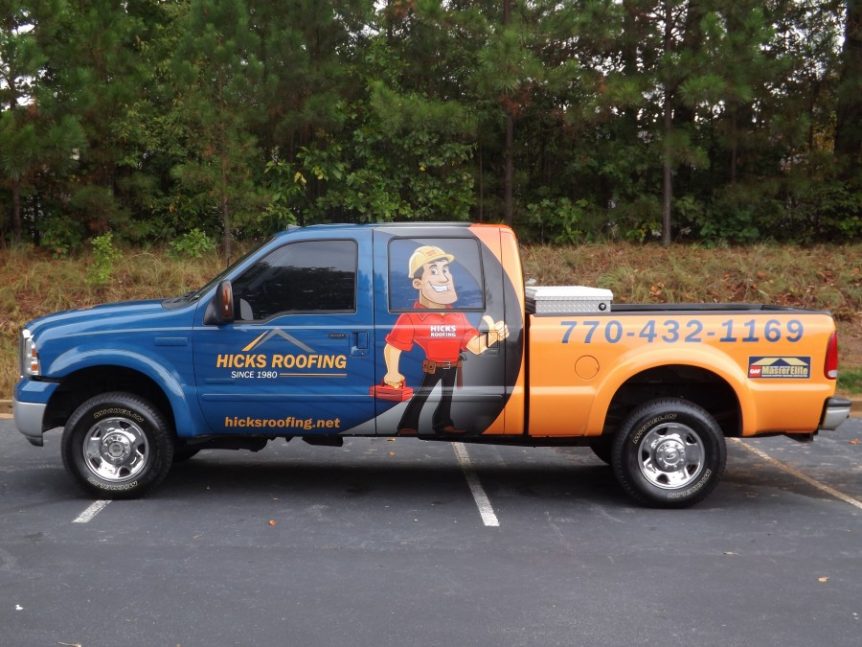
Physical printed materials operate on a completely different channel. A well-designed postcard in a mailbox gets held, looked at, and considered in a way that a banner ad never will. A vehicle wrap rolling down Peachtree Street gets sustained attention that a Facebook ad gets scrolled past in half a second. A banner outside a business on Roswell Road creates repeated impressions for every commuter who drives that route daily.
Print engages different cognitive pathways. Research consistently shows that physical media generates stronger emotional responses, better recall, and higher trust than digital equivalents. This isn’t nostalgia — it’s neuroscience.
The Targeting Myth
One of the arguments against print is that digital is “more targeted.” And for certain applications, that’s true. If you’re selling software to a niche audience scattered across the country, digital targeting makes sense. But if you’re a local Atlanta business serving a geographic area — and most businesses reading this are — print’s targeting is actually more precise than you might think.
Vehicle wraps target everyone along your daily routes and at every job site. That’s hyperlocal targeting that updates automatically as your vehicles move through Marietta, Sandy Springs, Roswell, and wherever else your work takes you. Window graphics target every pedestrian and driver passing your location. Yard signs target the exact neighborhood where you’re doing work. Door hangers target specific streets and subdivisions.
For a service business in Cobb County, a fleet of wrapped vehicles generates more relevant local impressions per dollar than most digital campaigns. The audience is inherently qualified — they’re people who live and work in the same areas you serve.
The Longevity Advantage
Here’s the math that changes the conversation. A digital ad campaign runs for as long as you’re paying for it. The moment you stop funding it, every impression stops. Your cost-per-impression is a recurring expense with no residual value.
A vehicle wrap is a one-time investment that generates impressions for years. A building sign works around the clock for the duration of its life. A wall mural in your lobby impresses every visitor for as long as it’s up. Window graphics sell for you 24 hours a day, 365 days a year, with zero ongoing cost after installation.
When you calculate the cost per impression over the full lifespan of printed materials, the numbers are staggering. A wrapped service van in metro Atlanta generating thousands of impressions per day over five or more years reaches a cost-per-impression that no digital platform can touch.
The Integration Play
The smartest Atlanta businesses aren’t choosing between print and digital. They’re using both, and making them work together. A wrapped truck drives brand awareness. The person who sees that truck three times on their commute through Kennesaw then searches for the company name on their phone. The website converts them. Neither channel works as well alone as they do together.
QR codes on printed materials bridge the gap directly. A banner at a job site with a QR code linking to a portfolio or review page turns a physical impression into a digital engagement. A window graphic with a QR code linking to a menu or booking page converts foot traffic into measurable online actions. The print piece does the hard work of capturing attention in the physical world, and the digital component handles the conversion.
Where Businesses Waste Money on Print
Print marketing fails when businesses treat it as a commodity rather than a communication tool. Here are the most common ways Atlanta businesses waste their print marketing budgets:
Cheap materials that look cheap. That bargain banner from an online vendor might save money upfront, but it fades in the sun, wrinkles in the rain, and communicates “discount operation” to everyone who sees it. The medium is part of the message. Quality materials signal quality business.
No clear message. A vehicle wrap that tries to list every service, every phone number, every website, every social handle, and a photo of the owner ends up communicating nothing. The most effective print marketing delivers one clear message that people can absorb in seconds.
No strategy behind placement. A gorgeous banner that nobody sees because it’s facing the wrong direction or hung too high to read is money wasted. Placement strategy — where people actually look, from what distance, at what speed — is just as important as the design.
One-and-done mentality. A single yard sign at one job site is a start, but the compound effect comes from consistent, repeated exposure. Businesses that commit to branded materials across every touchpoint — vehicles, job sites, storefronts, events — build recognition that isolated efforts never achieve.
Making Print Work in 2026
The businesses getting the best return on print marketing in Atlanta right now are the ones treating it as a system, not a one-off purchase. They wrap their vehicles, brand their job sites, maintain professional storefront signage, use quality banners for promotions, and ensure every physical touchpoint reinforces the same visual identity.
If you’ve written off print marketing based on a bad experience, the problem probably wasn’t the medium. It was the execution. Done right — with quality materials, clear messaging, strategic placement, and professional production — print marketing is one of the most cost-effective tools an Atlanta business can invest in. And unlike a digital ad that disappears the moment you stop paying, print keeps working long after the invoice is paid.
Ready to Get Started?
Contact Extreme Color today for vehicle wraps, signs, banners, and more.
Get a Free Quote