

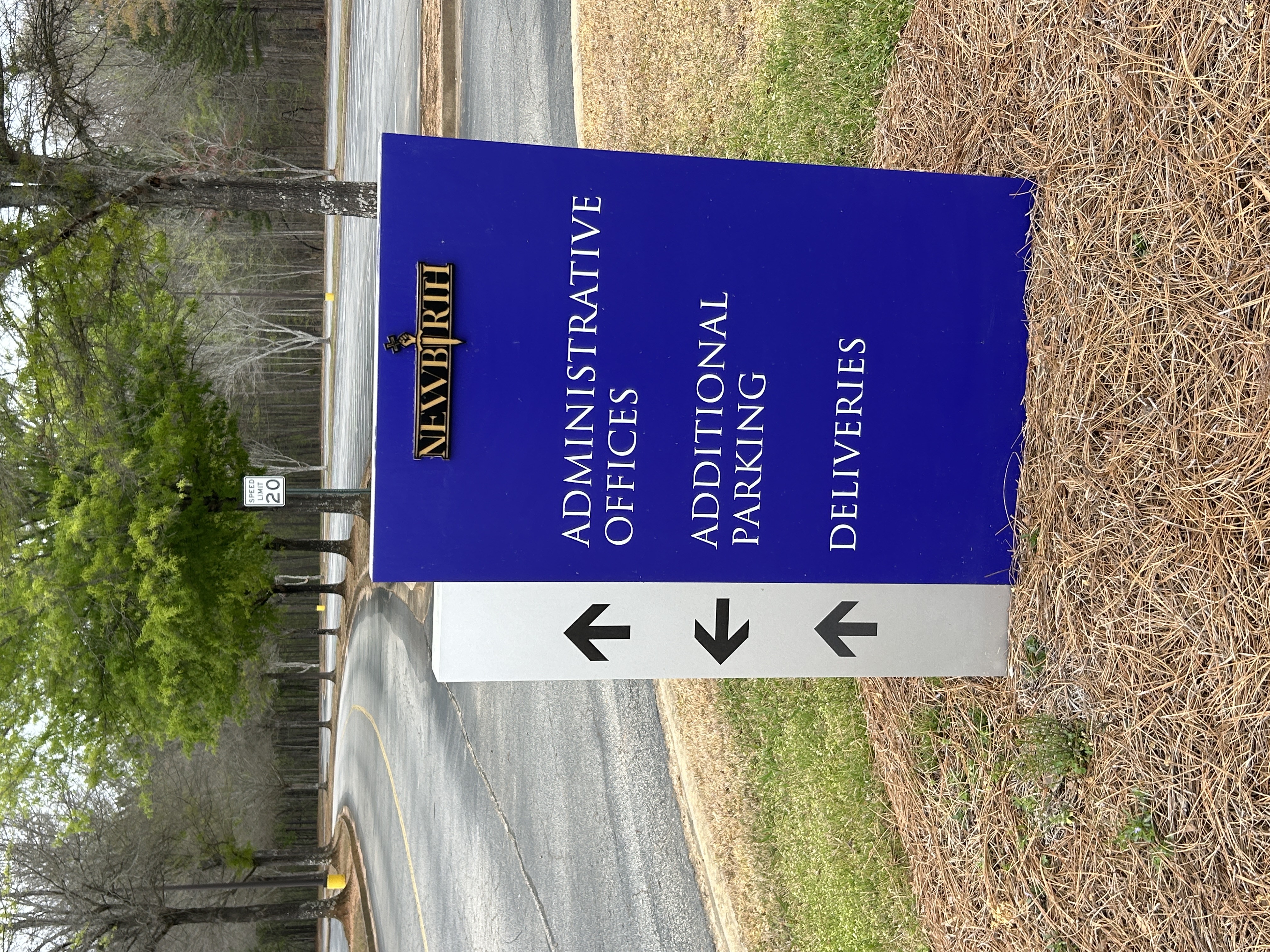
The Quiet Sign Job That Decides Whether Your Visitors Get Lost
Wayfinding signage is the work nobody notices when it's done right and everybody complains about when it's done wrong. We get calls from frustrated property managers, leasing offices, and corporate facilities teams across Atlanta who've watched delivery drivers, residents, and visitors circle their property looking for the right building. The fix is almost always the same: better wayfinding.
Our team installs wayfinding for apartment communities in Brookhaven, corporate campuses along Peachtree Industrial, mixed-use developments in West Midtown, and medical office parks all over the metro. The patterns we see repeat over and over. Most properties don't need more signs — they need smarter signs in the right places.
The Three Decisions That Drive Everything Else
Before we talk about materials or design, the property needs to make three decisions. Skip these and the rest of the project drifts.
First: what are the destinations? A corporate campus might have buildings A through F, a leasing office, visitor parking, and a loading dock. An apartment community might have a clubhouse, a fitness center, a pool, mailboxes, and 14 separate buildings. Until you have a clean list of destinations, no sign system is going to work.
Second: where do visitors enter? Wayfinding starts the moment a car pulls off the public street. If your main entrance is on Roswell Road but most deliveries come through a side gate, you need wayfinding for both paths.
Third: who are the users? A medical office complex on Northside Drive has elderly patients reading signs from a moving car. A creative office park in the Old Fourth Ward has rideshare drivers reading signs at night. A self-storage facility off I-285 has commercial drivers maneuvering box trucks. Each of these users needs different sign sizes, fonts, and contrast levels.
Sign Types That Actually Get Used
A solid wayfinding system uses a small number of standardized sign types repeated consistently across the property.
Primary identification signs are the big property monument signs at the entrance. They tell you that you've arrived. These are usually post-and-panel or monument-mounted with the property name and logo at scale.
Vehicular directional signs are the arrows. These guide cars from the entrance to specific destinations. They need to be readable from 80 to 100 feet away at a moderate driving speed, which means tall letter heights and high contrast.
Secondary identification signs are the building or section identifiers — Building A, Pool Area, Loading Dock. These are smaller and read at closer distances.
Pedestrian wayfinding takes over once people park. These are the smaller post-mounted or wall-mounted signs that guide foot traffic, often with maps or directories.
Materials Built for Atlanta Conditions
Outdoor signage in Atlanta has to survive UV, humidity, and the occasional ice storm. We typically build wayfinding systems out of aluminum composite material with vinyl graphics, post-and-panel hardware in powder-coated steel, and reflective sheeting where night visibility matters.
For higher-end properties — a Class A office tower in Buckhead, a luxury apartment community in Inman Park — we move into more substantial cladding materials, dimensional lettering, and architecturally integrated mounting. The principles are the same; the finish level changes.
One thing we always push back on: paper-laminated signs in any outdoor application. We see them at properties trying to save money and they look bad within six months. Atlanta humidity is not kind to budget materials.
Updating Without Replacing Everything
Properties change. Tenants move in, units get renumbered, the leasing office relocates. A well-designed wayfinding system anticipates this with replaceable inserts or modular panels.
For our property management clients, we often build hardware that holds standard insert sizes. When a building changes names, the property doesn't have to replace the post — just the insert. This pays off the first time a tenant rebrands or the building changes hands.
ADA and Code Considerations
Wayfinding inside buildings has ADA requirements around tactile lettering, braille, and mounting heights. Outdoor wayfinding is less regulated but still has local code considerations. Some Atlanta jurisdictions have sign ordinances that limit total sign square footage on a property, height restrictions on freestanding signs, and setback requirements.
We work through these with our clients during the design phase. Getting a permit for a slightly smaller, code-compliant sign is better than installing something oversized and getting cited six months later.
Bringing It Together
Good wayfinding is invisible. People show up, find what they're looking for, and don't think twice about it. That's the goal. Bad wayfinding is the property manager's phone ringing at 8 a.m. because three new residents can't find their building.
If you're managing an Atlanta property with confused visitors, frustrated tenants, or a leasing team that spends too much time giving directions over the phone, the fix is usually a coordinated wayfinding system, not one more arrow on a stake. Walk the property the way a first-time visitor would and write down every place you have to guess. That list is your project.
Ready to Get Started?
Contact Extreme Color today for vehicle wraps, signs, banners, and more.
Get a Free Quote