

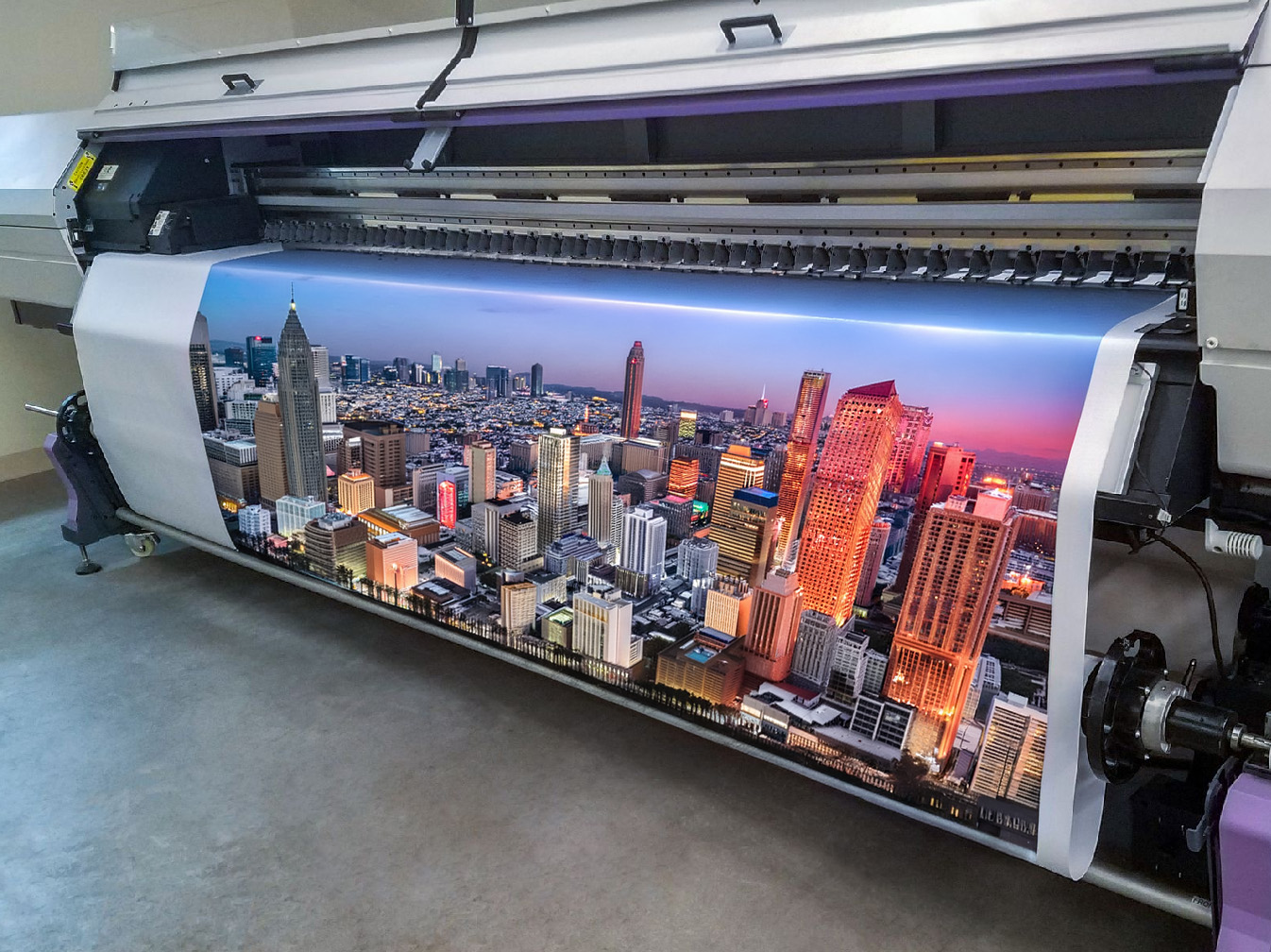
Your Screen and Your Banner Speak Different Color Languages
Monitors emit light. Banners and signs reflect it. That's the core of the problem. Your screen uses RGB color — Red, Green, and Blue light combined to produce every color you see. Large format print uses CMYK — Cyan, Magenta, Yellow, and Black inks layered on a physical surface.
RGB can produce vivid, glowing colors that are literally impossible to replicate with ink. Neon blues, electric greens, hyper-saturated reds — these colors exist in light. The moment you convert them to ink, they get pulled back toward reality. This isn't a quality issue. It's physics.
Screen Brightness Is Working Against You
Most computer monitors are set much brighter than what a printed piece will ever look like under ambient light. A monitor cranked to 300–400 nits makes colors pop in ways that ink on vinyl simply cannot match. If you're proofing on a laptop in a dark room, you're setting yourself up for disappointment.
Professional print shops calibrate their monitors to simulate print conditions as closely as possible. But without a color-calibrated display and a controlled viewing environment on your end, there will always be some gap between what you see and what you get.
Lighting at the Install Site Changes Everything
A banner installed under cool fluorescent warehouse lights looks completely different than the same banner in warm tungsten retail lighting, or outside in direct afternoon sun. Color is not a fixed property of an object — it's a relationship between the object, the light hitting it, and your eyes.
This is why we always recommend viewing your printed piece under conditions as close to its final install environment as possible before signing off on a large run.
Photos of Prints Are Notoriously Unreliable
Phone cameras auto-correct color. They boost saturation, adjust white balance, and apply HDR processing — all of which alter how a printed piece looks in a photo. If someone sends you a photo of a banner and it looks wrong, there's a good chance the camera is the culprit, not the print.
The only reliable way to evaluate a print is to look at it in person, under appropriate lighting, at an appropriate viewing distance.
What You Can Do to Get Closer Results
Here are practical steps to close the gap between screen and print:
Request a physical proof for large or brand-critical jobs. Seeing a printed swatch before committing to a full run can save real money.
Use PMS (Pantone) colors for brand-critical elements if color consistency across materials is essential. Ask us about how we handle spot color matching.
Evaluate prints in person under real-world lighting before making judgments. Photos of prints are almost never accurate.
The Bottom Line
Color differences between screen and print are normal, expected, and manageable. Understanding why they happen puts you in control. The best way to ensure a top quality product is to treat color proofing as a process — not a surprise — and consistently get results you are happy with.
Have a project where color accuracy is critical? Get in touch with our team. We'll walk you through your options and help you get it right the first time.
Ready to Get Started?
Contact Extreme Color today for vehicle wraps, signs, banners, and more.
Get a Free Quote