

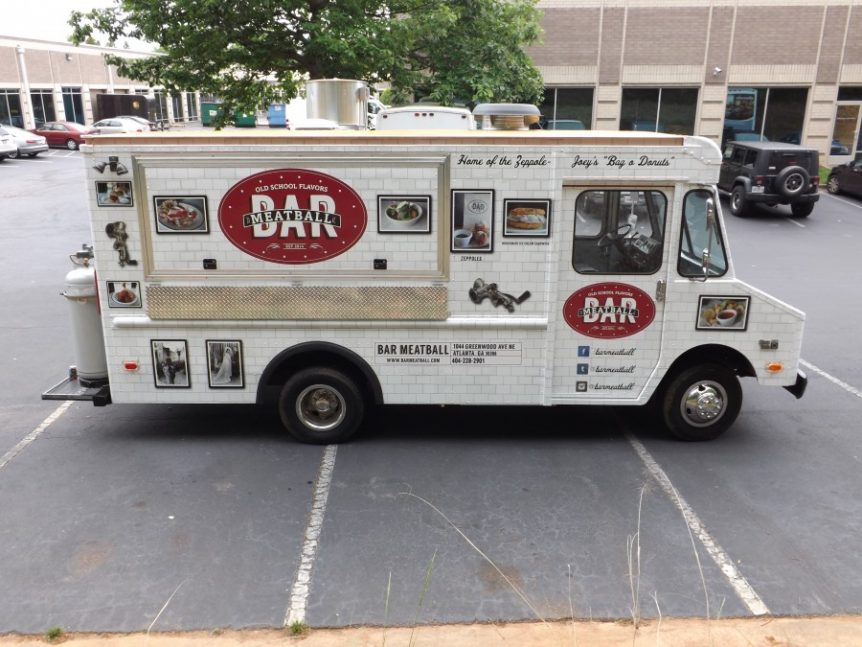
A food truck is a restaurant that has to sell itself in the three seconds it takes someone to walk past. There is no host, no reservation, no Yelp page open in the customer's hand at that moment. There is a big metal box on wheels, and whatever is printed on the side of it is doing all the convincing. That makes a food truck wrap one of the hardest-working graphics we produce.
Atlanta's mobile food scene shows up everywhere from the Beltline to brewery lots in West Midtown to office parks up GA-400 at lunch. The trucks that stand out in that crowd are almost never the ones with a vinyl banner zip-tied to the side. They are the ones wrapped so the whole vehicle is the brand. Here is what goes into doing that right.
The Side Panel Is Your Billboard
The serving side of the truck is the single most valuable piece of real estate you own, so we design it first and design it big. The name and the one thing you want to be known for need to read from across a parking lot or a festival field. If you are the smash burger truck, the burger should be the hero, not a paragraph of small text nobody reads while standing in line.
The trap we steer clients away from is cramming everything on. A food truck wrap works when it commits to a strong image and a clear name, and lets the menu board handle the details up close. From twenty feet the panel sells the craving; from three feet the menu closes the sale. Those are two different jobs and they want two different amounts of text.
Wrapping Around a Working Kitchen
A food truck is not a smooth box, and that is what makes it a real wrap job rather than a sticker. There is a serving window that has to stay clear and functional, a service counter, exterior latches, propane and utility access panels, vents, and often a wrap-around diamond-plate skirt along the bottom that vinyl behaves differently on.
We plan the artwork around all of it. The serving window becomes a deliberate frame in the design rather than an awkward hole punched through the logo. Access doors get wrapped so they still open, with the graphics registered so the image lines up when everything is closed. Rivets, seams, and textured panels each take specific handling during install so the vinyl seats down and stays down instead of tenting over the hardware.
This is also why measuring and templating the actual truck matters so much. Food trucks are heavily customized, and no two are laid out the same even when they started as the same chassis. We build the design to your specific truck, not a generic side view.
Built to Survive Service
A food truck wrap lives a rougher life than almost any other vehicle graphic. It gets hosed down, it sits in full sun during a summer lunch rush, it deals with grease, cleaning chemicals, and the heat coming off its own cooking equipment. The wrap has to hold up to all of that and still look sharp at the next event.
That is why finish and lamination are not afterthoughts. A protective laminate over the printed vinyl is what stands between your graphics and the daily abuse of running a kitchen. It guards against UV fade through Atlanta's long summers, and it makes the surface far easier to wipe down when service gets messy. We talk through gloss versus matte too, because the finish changes how the wrap photographs, and these days a huge amount of a truck's marketing is customers posting photos of it.
Consistency Across Your Whole Presence
The wrap is the anchor, but a food truck brand does not stop at the panels. The same look should carry to the menu board bolted above the window, the A-frame you set on the pavement, the tent you throw up at a festival, and the stickers you hand out. When all of that matches the truck, a customer who saw you at a brewery on Saturday recognizes you at an office park on Tuesday.
Because we print all of those pieces, we can keep the colors and artwork consistent across the wrap and everything around it. That repetition is what turns a truck people liked once into a truck people look for.
Practical Takeaways
If you are wrapping a food truck, lead with one strong image and your name, and trust the menu board to handle the fine print. Bring us the actual truck to template, because the serving window, access panels, and skirt all have to be designed around, not ignored. Insist on a quality laminate over the print, since your wrap is going to take heat, grease, and daily washdowns that ordinary graphics never see. And think past the truck to the menu board, A-frame, and event tent, so your whole setup reads as one brand wherever you park.
A great wrap makes a mobile kitchen look established, appetizing, and worth crossing a parking lot for. Our team designs and installs food truck wraps around metro Atlanta, and we are happy to walk your truck and talk through what will make it pull a line.
Ready to Get Started?
Contact Extreme Color today for vehicle wraps, signs, banners, and more.
Get a Free Quote