

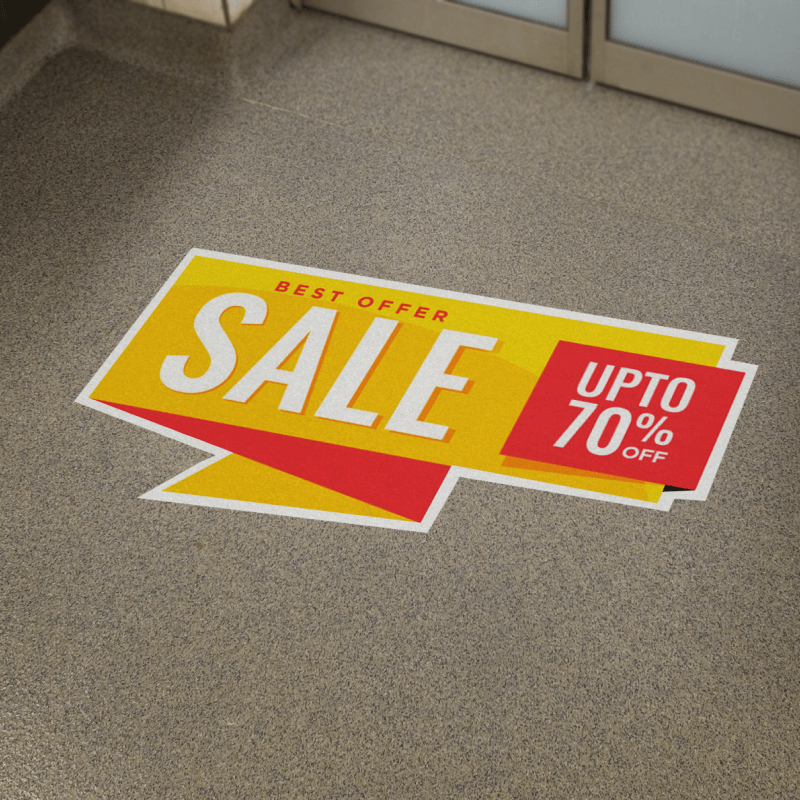
The Floor Is Marketing Real Estate Most Brands Ignore
Walk into a busy retail space in Lenox Square or a showroom along Howell Mill Road and your eye does a predictable scan — windows, walls, signage at eye level, shelving, ceiling. Almost no one looks down. That's exactly why the floor is one of the most underused branding surfaces in the building. Floor graphics put your message in a place customers aren't bracing against, which is why they work.
We get a lot of calls from retailers, event producers, gym owners, and real estate teams asking whether floor graphics are a fit. Most of the time, the answer is yes. The trick is knowing which type of floor graphic to use, where to put it, and how to spec it so it doesn't fail in the first week.
What "Floor Graphics" Actually Means
Floor graphics is a category, not a single product. The differences matter because the wrong material in the wrong location turns into a slip hazard, a peel-up problem, or a refund call.
The most common version is a printed vinyl decal with a textured anti-slip laminate on top. The print is sealed, the surface has enough grip to meet basic safety standards, and the adhesive is engineered for short-to-medium-term use on smooth indoor flooring.
Then there are heavier-duty floor graphics built for high-traffic concrete, polished tile, or sealed wood. These use a thicker carrier film and a stronger laminate that handles foot traffic, rolling carts, and cleaning crews for months at a time. They cost more and take longer to remove, but they survive environments where the standard product would scuff through in a week.
For very rough surfaces — exposed concrete in warehouse-style retail, brick walkways, painted asphalt at outdoor events — there are conformable graphics that pebble down into the texture instead of riding on top of it. These look almost painted-on once installed. Removal is a different conversation.
Where Floor Graphics Earn Their Keep
Retail is the obvious one. We've installed floor decals at storefronts in Buckhead and Ponce City Market that point customers toward a specific product launch, mark off promotional zones, or simply add brand presence at the front entry. The conversion data on properly placed retail floor graphics is the reason this work keeps coming back.
Wayfinding is the underrated one. In big spaces — convention areas at the Georgia World Congress Center, large showrooms, multi-tenant office lobbies — floor graphics work as directional cues without adding any new vertical signage. Footprints, arrows, color-coded paths, room numbers near doorways. The eye picks them up exactly when someone slows down to figure out where to go.
Events use floor graphics for logo placement at registration, sponsor recognition along main aisles, and crowd-flow management at high-density entry points. Trade shows running booths in places like the AmericasMart use floor decals to extend brand presence beyond the booth's physical footprint.
Gyms, studios, and physical-therapy spaces use floor graphics for instructional markings — distance markers on a turf strip, foot-position guides for a class, rep zones for circuit training. The floor is where the activity happens, so the floor is where the information should be.
Why the Floor Is Harder Than the Wall
A wall graphic gets installed once and lives a calm life. A floor graphic gets walked on, dragged across, mopped, occasionally hit by a stroller wheel or a forklift, and exposed to whatever sand, salt, and water comes in off the sidewalk. The print has to survive all of that without lifting at the edges, smearing under cleaning chemicals, or losing its anti-slip rating.
Surface prep is the single biggest variable. A floor that looks clean to the naked eye is almost never clean enough for adhesive vinyl. Wax buildup, residual cleaner, dust in the grout lines, and floor finish products all interfere with bond. Our team strips and preps the install zone before the graphic ever comes out of the box. Customers who skip this step and try a peel-and-stick install themselves are usually the ones calling us a week later.
Edge curl is the second variable. Foot traffic finds any unsealed edge and pries at it. We over-laminate, roll out the install with significant pressure, and on irregular surfaces we'll seal the perimeter with a clear edge sealant. None of this is glamorous, but it's the difference between a graphic that lasts a season and one that lasts a weekend.
What to Plan for Before You Order
Two questions decide most floor-graphic projects. First: how long does this need to live? A weekend event needs different material than a six-month retail campaign. We don't oversell durability — long-life material on a one-weekend job is a waste of money, and short-life material on a long-term install is a reprint waiting to happen.
Second: what does the floor look like, in person, today? Photos help, but we'd rather send someone out to look at the actual surface, especially on commercial concrete, polished tile, or any floor that's been refinished recently. The condition of the floor often changes the material recommendation.
Design also matters in ways it doesn't on a wall. Text reads differently when it's on the ground, and small details can disappear under foot traffic. We coach customers toward bolder type, simpler logos, and high-contrast color choices. A floor graphic is read in passing, not studied.
Practical Takeaways
Floor graphics are a fit for almost any high-traffic indoor space, but the material has to match the floor and the install window. Cheap material on the wrong floor is a callback. Right material on a clean, prepped surface is one of the longest-lasting print investments a business can make.
Use floor graphics where eye-level signage is already crowded or where you want to reinforce a path, a zone, or a moment of attention. Don't use them as a primary information surface if customers won't naturally look down to find what they need.
If you're planning floor graphics for a retail buildout, an event activation, or a wayfinding refresh anywhere in the metro, our team can walk the space, spec the right material, and handle the install end-to-end.
Ready to Get Started?
Contact Extreme Color today for vehicle wraps, signs, banners, and more.
Get a Free Quote