

Fleet Wraps vs. Magnetic Signs: A Real Cost Comparison for Atlanta Businesses
If you run a fleet of any size in metro Atlanta — from two vans to twenty box trucks — you’ve probably had the conversation about branding your vehicles. And somewhere in that conversation, someone suggested magnetic signs as the “budget-friendly” option. On the surface, it makes sense. But when you break down the actual numbers and the actual impact, the picture changes fast.
The Magnetic Sign Appeal
Let’s give magnetic signs their due. They’re cheap upfront — a pair of decent magnetic panels for a pickup truck might run you a couple hundred dollars. They’re removable, which appeals to business owners who use personal vehicles for work. And they require zero commitment: slap them on in the morning, pull them off at night.
For a sole proprietor just getting started, that flexibility has real value. No argument there. But the moment you’re running more than one vehicle, or you’re trying to build brand recognition across the sprawling metro Atlanta market, the math starts working against you.
The Hidden Costs of “Cheap”
Magnetic signs have a lifespan problem. Atlanta’s heat warps them. Highway speeds peel them off — we’ve heard stories from business owners who lost magnets on I-75 and I-285 more than once. UV exposure fades the graphics within a season. And because they’re removable, they get scratched, bent, and degraded every time someone handles them.
Replacement costs add up. If you’re buying new magnetic panels every six to twelve months per vehicle, and you’re running even a small fleet of five vehicles, you’re spending real money on something that always looks temporary — because it is.
Then there’s the moisture problem. Magnets trap water and dirt between the sign and the paint. Leave them on too long, and you get paint discoloration. Take them off and on constantly, and you get micro-scratches. Either way, you’re potentially damaging the very asset you’re trying to protect by avoiding a permanent wrap.
What a Full or Partial Wrap Actually Costs Over Time
A professional vehicle wrap is a larger upfront investment — that’s the undeniable reality. But here’s what that investment buys you: a finish that withstands Atlanta’s scorching summers, winter freezes, road grime from commuting through Spaghetti Junction, and years of daily use without fading.
Quality wrap materials from reputable manufacturers are engineered for outdoor vehicle use. They resist UV degradation, they’re rated for years of outdoor exposure, and when it’s time to remove them, they come off cleanly without damaging factory paint — in fact, wraps protect the paint underneath, which preserves resale value.
Divide the total cost of a wrap by the number of years it lasts, then divide by 365 days. The daily cost of a professional wrap is remarkably low. Now compare that to the cost of repeatedly replacing magnets, factoring in the time someone spends ordering, picking up, and swapping them out. The wrap wins on pure economics within the first couple of years.
The Impression Factor
This is where the conversation moves beyond dollars and cents. A truck rolling down Cobb Parkway with magnetic signs looks like a truck with magnetic signs. Everyone can tell. The edges are visible, the signs shift slightly off-center, and the overall impression is “small operation, temporary setup.”
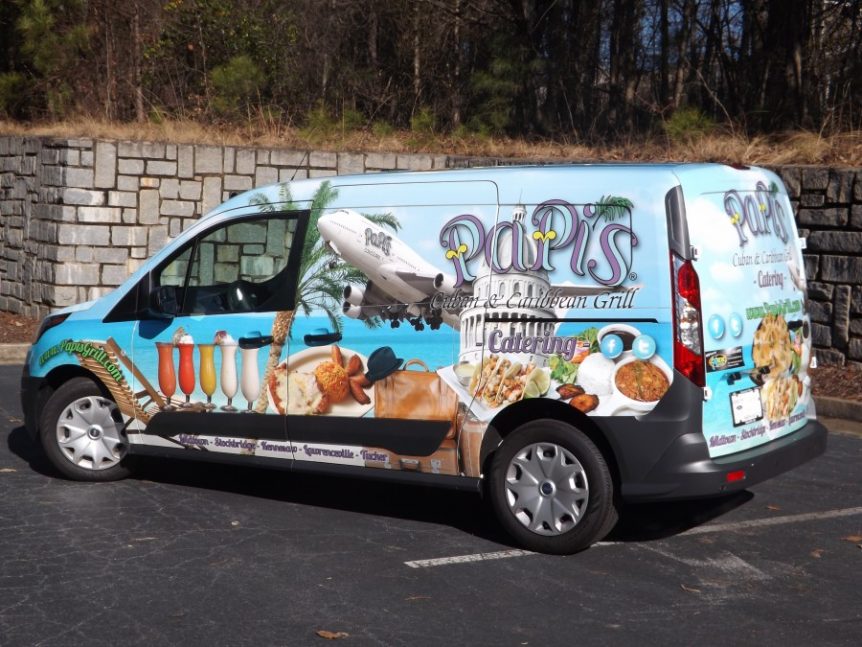
A wrapped vehicle — whether it’s a full wrap, a partial wrap, or even a clean set of cut vinyl graphics — looks professional, established, and intentional. It says this company invested in its brand. When that vehicle is parked on a job site in Buckhead or delivering to a business in Sandy Springs, it’s making an impression that magnetic signs simply cannot match.
We’ve worked with service companies across metro Atlanta — HVAC technicians, plumbers, cleaning services, caterers — who told us their phone calls increased noticeably after wrapping their fleet. Their vehicles became mobile billboards generating thousands of daily impressions along routes through Roswell, Alpharetta, and Kennesaw without any recurring advertising spend.
The Partial Wrap Sweet Spot
If full wraps are beyond the current budget, partial wraps hit an excellent middle ground. A partial wrap typically covers high-visibility areas — the rear, sides from the wheel wells back, and sometimes the hood — while leaving some factory paint exposed. The result is a polished, branded look at a fraction of the full-wrap price.
Spot graphics and cut vinyl lettering are another step down in cost while still delivering a permanent, professional appearance that magnets can’t touch. We work with businesses at every budget level to find the right solution that makes financial sense now and builds brand equity over time.
Making the Decision
Ask yourself two questions. First: when customers see my vehicle, what impression do I want them to have? Second: what will I spend on vehicle branding over the next three to five years if I keep going with temporary solutions?
If you’re a one-person operation with a personal truck and you’re testing a new business idea, magnets are fine for now. But if you’re an established Atlanta business with a fleet that represents your brand every day on roads from Marietta to Decatur, it’s worth having a real conversation about wraps. The numbers make sense, and the visual impact isn’t even close.
Ready to Get Started?
Contact Extreme Color today for vehicle wraps, signs, banners, and more.
Get a Free Quote