

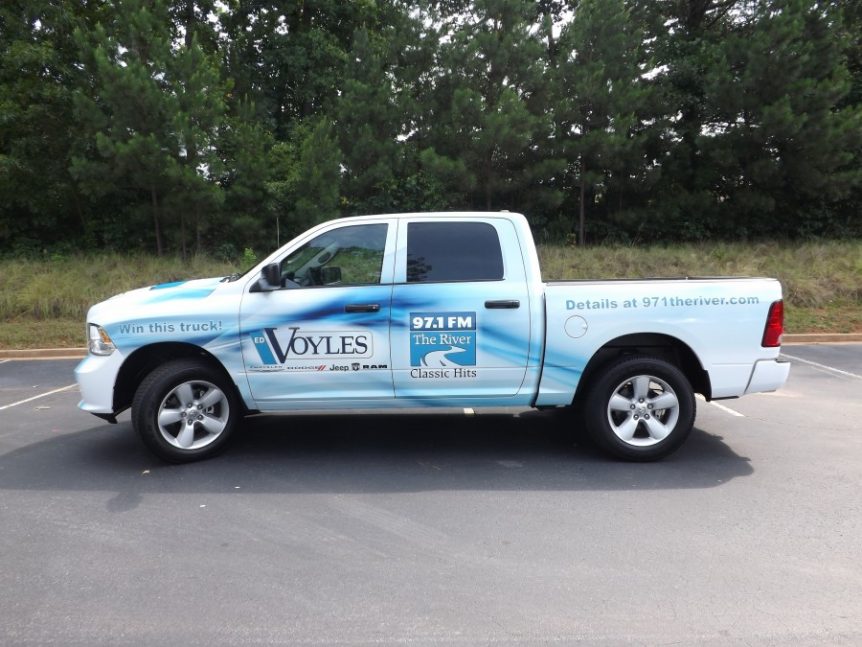
One Truck Is a Vehicle. Ten Trucks Is a Brand.
A single wrapped service truck driving down I-285 is a billboard. Ten wrapped trucks, all carrying the same colors and the same logo in the same spot on the side panel, is something else entirely. They become a brand presence. People in Sandy Springs see one in their neighborhood. People in East Atlanta see another in theirs. The brain stitches them into a single, larger company without anyone telling it to.
That's the real power of a fleet wrap program, and it's why so many Atlanta service businesses — plumbers, electricians, HVAC, landscapers, cleaning companies, pest control, delivery — eventually move past wrapping vehicles one at a time and start treating the fleet as a single design system.
Why Fleet Branding Is Different From Single-Vehicle Wraps
Wrapping one truck is a design problem. Wrapping a fleet is a systems problem. The design has to scale across different vehicle bodies — a service van, a pickup, a box truck, a sprinter — without falling apart visually. The colors have to match across print runs done months or years apart. The logo has to land in the same spot whether the vehicle is a Ford Transit or a Chevy Silverado, even though those bodies are nothing alike.
The companies that get fleet branding right treat the wrap program like a brand standards document, not a one-off project. We work with them to design a layout system that travels — a set of rules for color, logo placement, phone number sizing, service descriptions, and any seasonal or campaign messaging — and then we apply that system across each new vehicle as it joins the fleet.
Color Matching Across the Fleet
The fastest way to make a fleet look like a fleet is consistent color. The fastest way to break that consistency is sloppy color management. Inks shift slightly from batch to batch. Vinyls have manufacturing tolerances. Different printers calibrate differently. A truck wrapped this month and a truck wrapped a year from now can land in noticeably different shades of the same brand color if no one is managing the pipeline.
Our shop maintains color profiles tied to each fleet client. We print test swatches against the original spec, and we recalibrate before running a new vehicle so the panels coming off the press in 2026 still match the truck we wrapped in 2025. For brand colors that have to be exact — corporate red, a specific blue — we'll often use spot color matching or specialty vinyls in addition to printed graphics.
Designing for Different Body Types
Most growing fleets aren't all the same vehicle. A plumbing company might run service vans, a couple of pickups for the bigger jobs, and a box truck for equipment. Each body shape is a different canvas. A design that looks balanced on a sprinter van can look stretched and awkward on a pickup bed.
The fix is a flexible design system rather than a single fixed layout. We design with anchor points — logo always at the same vertical proportion from the door handle, phone number always at the same height from the ground, service description in a consistent band across the lower panel — so the eye sees the same vehicle on different chassis. The vehicles don't have to be identical to feel like a set. They just have to share rules.
Staged Rollouts for Existing Fleets
Most companies don't wrap their whole fleet on the same day. The trucks are working. Pulling all of them off the road at once isn't realistic. So fleet rollouts happen in waves, often tied to the company's normal vehicle turnover or service downtime.
We schedule installs in groups — three to five vehicles at a time, often over a weekend or evening so the trucks are back on the road for Monday morning. Newer vehicles get wrapped first because the wrap will last longer on a vehicle the company plans to keep for years. Older vehicles get wrapped last, or get a partial wrap that's less expensive but still carries the brand.
Phone Numbers, URLs, and the Information That Has to Be Legible
A pretty wrap that nobody can call is a missed opportunity. The phone number, the website, and the core service description have to be legible from a moving vehicle in the next lane. That means large, high-contrast type — usually white or a high-contrast brand color against the vehicle's primary panel.
We size phone numbers and URLs by viewing distance. A truck that parks in residential driveways for service calls needs different information than a truck that's mostly seen at highway speed on the connector. Most fleet vehicles need both — close-up information for the driveway and large, simple information for the highway.
Maintenance, Repairs, and the Replacement Plan
Fleet wraps live hard lives. They get washed at commercial wash bays, scraped by mailboxes, hit by debris, parked in full sun. A quality wrap on a well-maintained vehicle holds up for years, but every wrap eventually needs touch-up or replacement. We keep design files and color profiles on hand for each fleet client so a damaged panel can be reprinted to match without redesigning anything.
For companies that want to keep their fleet looking sharp without scheduling unplanned shop visits, we'll do an annual review — drive through the lot, identify panels that need replacement, schedule the work as a batch. It's the same logic as fleet maintenance. You don't wait for the truck to break down to change the oil.
The Long Game
Fleet branding compounds. The first wrapped truck barely registers with the public. The fifth one starts to feel like a pattern. The tenth one becomes recognizable. Atlanta service businesses that have run consistent fleet programs for years end up with a brand presence on the road that no advertising budget could buy quickly.
The trick is consistency. Same colors, same logo placement, same design rules across every vehicle and every install year. That's the part that's worth the work. The rest is just paint and vinyl.
Practical Takeaways
Treat the fleet as a brand system, not a series of one-offs. Build a flexible layout that travels across body types instead of forcing every truck into the same template. Lock down color management across print runs. Stage the rollout so the trucks keep working. Keep design files and color profiles on hand so damage repair doesn't restart the design process. And give it time — fleet branding pays back over years, not weeks.
Ready to Get Started?
Contact Extreme Color today for vehicle wraps, signs, banners, and more.
Get a Free Quote