

The Fake Brands That Have to Look Real
If you've watched a film or TV show shot in Atlanta in the last decade, you've seen our work — or work like ours — without realizing it. The corner deli that the protagonist walks past in episode three. The fictional energy drink on the convenience store shelf. The campaign poster for the senator who doesn't exist. All of that is print work, and getting it right is harder than it looks.
We work with Atlanta-based productions, set decorators, and prop houses on what's collectively called fictional branding — the print materials that build out a believable world without using real, copyright-protected logos. It's a corner of large format printing that has its own rules.
Why Productions Can't Just Use Real Brands
The simple version: real brands have lawyers. Productions can't show a name-brand cola on a kitchen counter without clearance, can't have a character drink at a Buckhead bar with a recognizable logo without an agreement, can't shoot a chase scene past a real storefront without permission. Some shows do clear real brands and pay for placement. Many don't, and the ones that don't need fictional brands that look as real as possible.
For Atlanta productions especially — where so much shooting happens in real Georgia neighborhoods that need to play as Anywhere, USA — fictional branding is the layer that turns a recognizable Decatur block into a fictional Brooklyn street or a recognizable Marietta suburb into a generic Midwestern town.
What Productions Order From Us
The print categories that show up most often in our production work cover a wide range.
Storefront signs are the biggest category. We print backlit-style sign faces, vinyl-faced cabinet inserts, vinyl banners, and rigid panels that get installed over real storefronts to disguise the actual business. A nail salon becomes a fictional bookstore. A coffee shop becomes a fictional law office. The transformation has to read as real on camera, which means the print quality, color accuracy, and material weight all matter.
Product packaging and product labels are next. Set decorators need a refrigerator full of food, a pharmacy shelf full of medications, a corner store full of products. Each item needs a label. We print these on appropriate substrates — paper for cardboard packaging, vinyl for bottles, foil-finished stocks for premium product looks.
Posters, flyers, and printed paper props are constant. Election campaign signs for fictional candidates. Concert posters for fictional bands. Wanted posters, missing person posters, restaurant menus, takeout brochures, real estate flyers. All of these are paper-based but have to age and weather appropriately to match the scene.
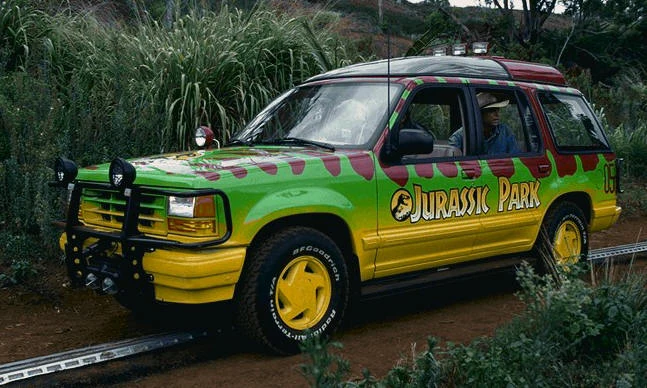
Vehicle graphics for picture cars are their own category — police graphics for a fictional precinct, delivery branding for a fictional company, a taxi livery for a city that isn't Atlanta. We've covered this in detail in earlier posts.
The Realism Problem
The challenge with fictional branding isn't making something look like a brand. Anyone can design a logo. The challenge is making something look like a brand that has actually existed for years, with the wear, dirt, fade, and weight that real signage carries.
Our approach: print at higher quality than the final shot needs, then let the production's distress team age it down. A pristine sign can be aged in a single afternoon. A poorly printed sign can't be saved no matter how much weathering you throw at it.
We also collaborate with set designers on material choices. An acrylic-faced sign reads differently than a printed vinyl banner. A foam-mounted poster on a wall reads differently than a tacked-up paper flyer. Picking the right substrate is part of the realism.
Turnaround and Production Timing
Production schedules don't accommodate normal print lead times. Scripts change. Locations swap at the last minute. A graphic that was supposed to be a poster on a wall becomes a sign on a storefront because the location changed two days before the shoot.
This is why we have ongoing relationships with Atlanta production companies rather than one-off transactions. When a set decorator calls us at 4 p.m. asking if we can have a fictional storefront sign printed, mounted, and ready for pickup tomorrow morning, the answer is faster when we've worked together before. We know their preferred materials, their typical sign sizes, their internal approval process.
IP and Legal Considerations
We don't give legal advice, but we work alongside production legal teams constantly. The basic rules: fictional brands need to be different enough from real brands that nobody confuses them. A fictional cola can't have red script on a white background. A fictional fast food chain can't use yellow arches. The brand has to live in its own visual space.
Productions usually have these guidelines locked in before they reach us. Our job is executing on the design at print quality, not deciding what the design should be. But when we see a fictional brand that's too close to a real one, we'll flag it. Better to have that conversation in the shop than after the episode airs.
Why Atlanta Productions Use Local Print Shops
Atlanta has become one of the largest production hubs in North America. Productions could ship print in from anywhere. They don't, because location print has to respond to location problems — a sign that needs to be reprinted because the production designer changed the logo color, a banner that needs to be remade because someone tore it during installation, a storefront vinyl that needs to be swapped because the location went a different direction.
Working with a local Atlanta shop means same-day pickup, in-person color review, and the ability to walk samples to set when something needs to be approved on the fly. That's the model that fits how productions actually work.
Final Thoughts
Fictional branding is one of the most invisible specialties in large format print. When we get it right, the audience never thinks about it — they just believe the world the show is building. When we get it wrong, the illusion breaks. For Atlanta productions building everything from prestige drama to network procedurals, the print work is part of the foundation. Treat it that way and it disappears into the story, which is exactly what it's supposed to do.
Ready to Get Started?
Contact Extreme Color today for vehicle wraps, signs, banners, and more.
Get a Free Quote