

Glass Is Everywhere in Modern Spaces — Here's How to Make It Work Harder
Walk into any recently built or renovated restaurant, boutique, or office in Atlanta and you'll notice a trend: glass everywhere. Floor-to-ceiling storefronts, glass partition walls, conference room enclosures, interior transoms. Modern architecture loves glass because it lets in light and creates a sense of openness. But all that glass creates problems too — no privacy, no branding, and a space that can feel exposed rather than inviting.
Decorative window film solves these problems without sacrificing the benefits of glass. It's one of the most versatile tools available for transforming plain glass into a functional design element that reinforces your brand, creates privacy where you need it, and adds visual interest to spaces that would otherwise be bare.
What Decorative Window Film Actually Is
Decorative window film is a thin, adhesive-backed material that applies directly to glass surfaces. Unlike solar or security films that are primarily functional, decorative film is designed first for aesthetics — though many decorative films also reduce glare and provide UV protection as a bonus.
The range of options is broader than most people realize. Frosted films create the look of etched or sandblasted glass at a fraction of the cost. Patterned films add geometric designs, organic textures, or custom graphics. Colored films introduce tints and hues. And printed films can reproduce virtually any image, logo, or design directly on the glass surface.
The material itself is durable, cleanable, and — critically — removable. Unlike actual etched glass, decorative film can be changed when your branding evolves, when a tenant changes, or when you simply want a fresh look. That flexibility is a significant advantage for businesses that lease their space, which is most of them.
Restaurants: Setting the Mood Before Guests Walk In
Atlanta's restaurant scene is intensely competitive. From the dining corridors of Westside Provisions District to the strip mall gems along Buford Highway to the upscale spots in Buckhead, restaurants are constantly looking for ways to stand out and create atmosphere. Decorative window film plays a bigger role in that than most diners realize.
Frosted film bands across storefront windows are one of the most common applications. That frosted strip — typically running at seated-diner height — creates a sense of privacy for guests inside while still allowing natural light in and giving passersby a glimpse of the activity within. It's a classic bistro look that works for everything from a neighborhood café in Grant Park to a cocktail bar on Edgewood Avenue.
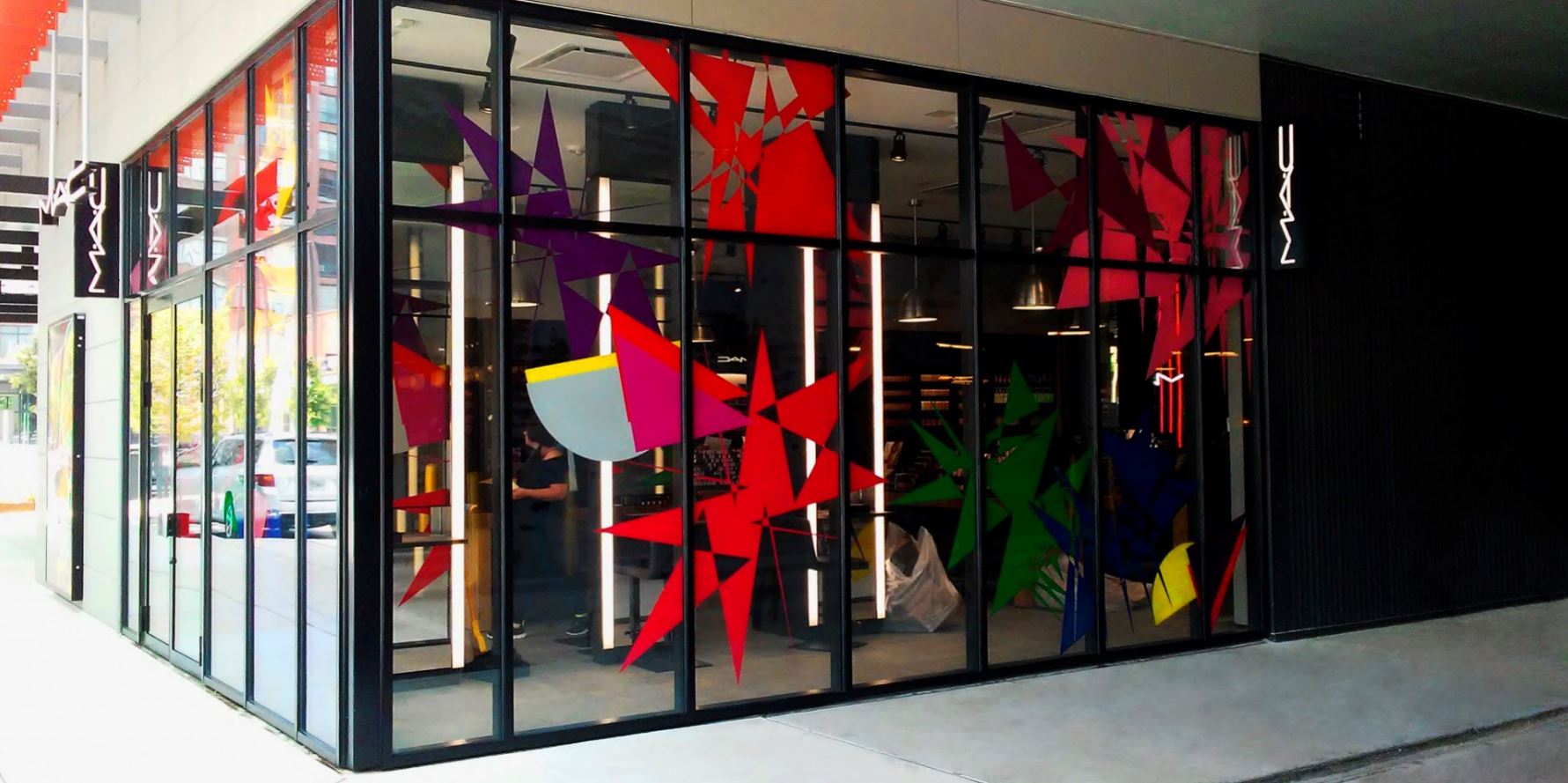
Custom-printed window graphics take it further. A restaurant can have its logo, a decorative pattern, or even menu highlights reproduced directly on the glass. We've seen Atlanta restaurants use their front windows as a design canvas — incorporating illustrations, typographic elements, or abstract patterns that reflect the restaurant's personality and cuisine.
For restaurants with private dining areas or glass-enclosed kitchens, decorative film provides visual separation without making the space feel closed off. A frosted film with a clear logo cutout on a private dining room partition tells guests that the space is reserved while still feeling connected to the main dining room.
Retail: Branding That's Built Into the Architecture
Retail stores face a constant tension with their storefront glass. You want people to see inside — that's visual merchandising 101. But you also need to communicate your brand, display hours and promotions, and sometimes manage sightlines to create a curated shopping experience rather than showing every rack and fixture from the sidewalk.
Decorative window film lets retailers balance those competing needs. A partially frosted lower panel can hide storage or checkout areas while keeping the upper glass clear to showcase the space. Branded elements — your logo, a tagline, a seasonal graphic — can be incorporated at eye level where foot traffic naturally looks.
For boutiques and specialty retailers in areas like Inman Park, Little Five Points, or the shops along the BeltLine, window graphics are part of the street-level identity. They help your store look intentional and designed rather than generic. And because film is relatively inexpensive compared to other architectural finishes, you can update it seasonally or for special promotions without a major investment.
Pop-up shops and temporary retail concepts benefit especially from decorative film. When you're occupying a space for a few weeks or months, you can't make permanent modifications. Window film lets you fully brand the space and then remove everything cleanly when the lease is up.
Offices and Commercial Spaces
The open office trend created a demand for glass everywhere — conference rooms, phone booths, executive offices, all enclosed in glass to maintain that "open" feeling. But glass conference rooms in a busy office mean zero visual privacy. Anyone walking past can see your presentation, your whiteboard, your facial expressions during a tough meeting.
Decorative film on office glass is now standard in most commercial build-outs across metro Atlanta. Frosted bands at eye level provide privacy while still letting light pass through above and below. Custom patterns can incorporate brand elements — a subtle logo repeat, a geometric pattern that echoes the company's visual identity, or gradient fades that add sophistication.
For businesses in Class A office space — Peachtree Center, Atlantic Station, the growing office parks along the GA 400 corridor — the quality of interior finishes communicates professionalism to clients and visitors. Decorative film on glass partitions is one of those finishing touches that elevates the entire space.
ADA compliance is another practical consideration. Building codes often require visual indicators on full-height glass panels to prevent people from walking into them. Rather than slapping on generic safety dots, decorative film serves the same safety function while looking intentional and branded.
Types of Decorative Film and Their Applications
Understanding the main categories helps you make the right choice for your space.
Frosted and etched-look films are the workhorses. They provide privacy, soften light, and create a clean, modern aesthetic. Available in varying levels of opacity — from a light haze to a fully opaque white — frosted films work in virtually any commercial environment. They're the default choice for conference rooms, medical office privacy, and restaurant window bands.
Patterned films add visual texture. Geometric patterns, organic designs, linen textures, and architectural patterns are all available as stock options. These work well when you want more visual interest than plain frost but don't need custom branding. Think spa environments, upscale retail, or hospitality spaces.
Custom-printed films are where branding comes in. Using large format printing, virtually any design can be reproduced on window film — logos, illustrations, photographs, typographic layouts. The print quality on modern window film is excellent, with crisp detail and accurate color reproduction. These films are perfect for branded storefronts, feature walls, and any application where the glass needs to tell a specific story.
Perforated window film — sometimes called one-way vision film — deserves mention here too. It's covered in tiny holes that allow people inside to see out while displaying a printed graphic to people outside. It's commonly used on storefront windows where you want a large-format advertisement facing the street without blocking the view from inside.
Installation and Longevity
Professional installation matters with decorative film. The material needs to be applied without bubbles, wrinkles, or debris trapped underneath. On large glass surfaces — like a full storefront or a conference room wall — this requires skill and the right tools. A poorly installed film is obvious and undermines the entire investment.
Once properly installed, decorative window film is low-maintenance. Clean it the same way you'd clean regular glass — a soft cloth with standard glass cleaner. Avoid abrasive pads or harsh chemicals that could scratch or degrade the film surface.
Interior decorative films typically last ten years or more. Exterior films are exposed to UV and weather, so their lifespan is shorter — typically five to seven years depending on sun exposure and orientation. South-facing glass in Atlanta takes the hardest hit from UV, which is worth factoring into material selection for exterior applications.
Turning Glass Into an Asset
Decorative window film sits at the intersection of design and function. It solves real problems — privacy, glare, branding, safety compliance — while adding visual value to your space. For Atlanta businesses with plenty of glass and a need to make it work harder, decorative film is one of the most cost-effective upgrades available.
Whether you're opening a new restaurant in Decatur, refreshing a retail storefront on the Westside, or finishing out office space in Dunwoody, consider what your glass is doing for you right now. If the answer is "not much," decorative film changes that equation.
Ready to Get Started?
Contact Extreme Color today for vehicle wraps, signs, banners, and more.
Get a Free Quote