

What Glass Does to a Restaurant
Walk into any newly built restaurant in Atlanta and you will probably see more glass than the architects in the 1990s would have ever signed off on. Full storefront windows, glass partitions between the dining room and the kitchen, glass dividers between booths, even glass walls between the bar and the host stand. It is a beautiful aesthetic when it works. It is a nightmare when it does not.
The problems are predictable. Diners feel exposed at the front window. Sun glare wrecks the dinner service from the west-facing tables. Conversations across glass partitions carry farther than they should. And the architectural drama starts to feel cold and empty without something on the glass to give the space identity.
Decorative window film solves all of this, and our team installs a steady amount of it for restaurants, bars, and hotels across metro Atlanta. The right film does atmospheric work that no curtain, no shade, and no piece of furniture can replicate.
Storefront Identity From the Sidewalk
A restaurant's storefront window is the most important branding surface it owns. It is what tells the foot traffic on Edgewood Avenue, the diners walking up to a Westside concept, or the after-work crowd cruising Howell Mill whether this is the kind of place they want to walk into.
Decorative window film at the storefront does two things at once. It establishes the brand with logos, wordmarks, hours, or custom patterns that match the interior aesthetic. And it manages the sightline into the dining room so the front-window diners feel framed rather than exposed.
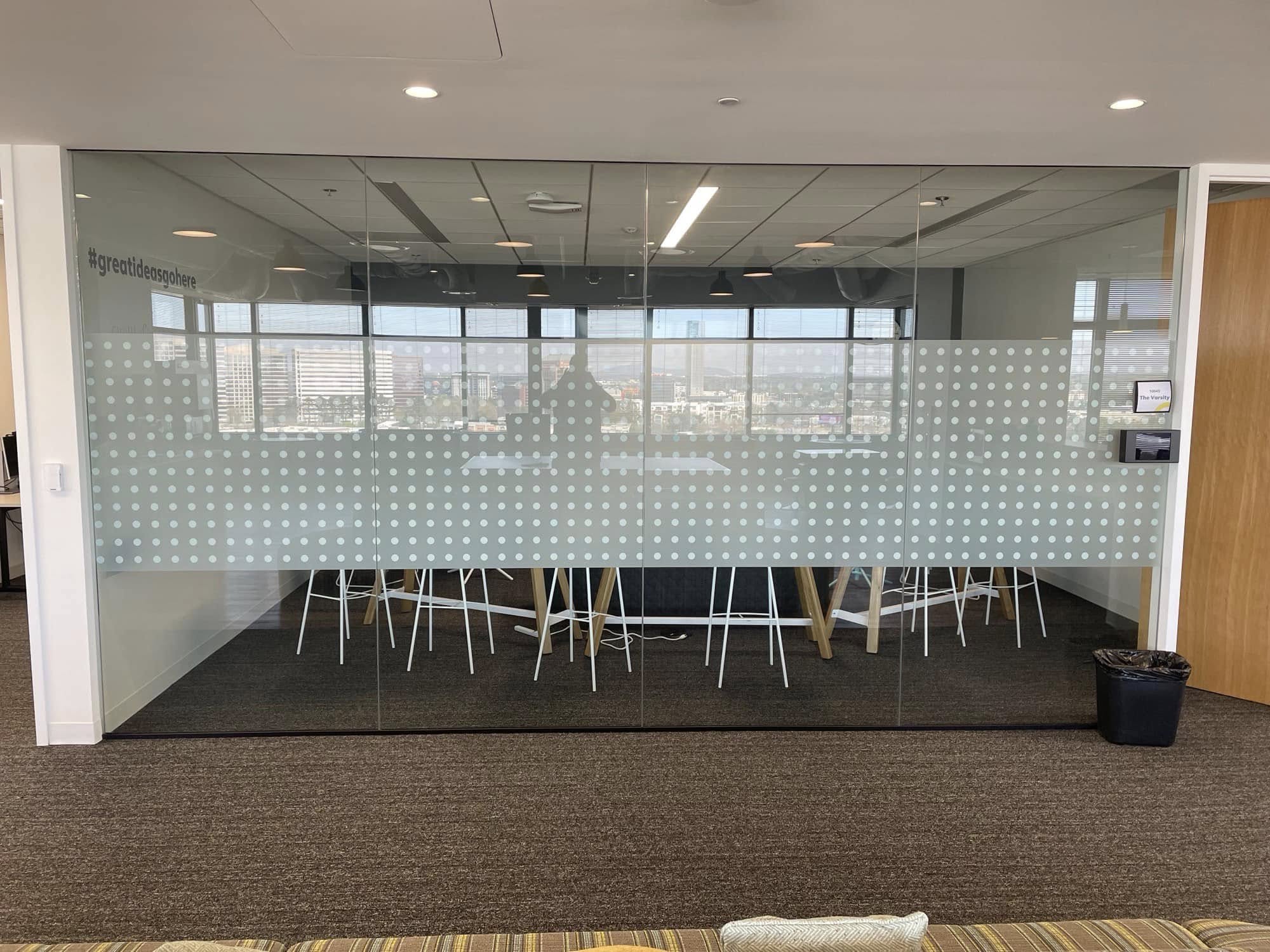
The film options we install for this most often include frosted vinyl cut with the brand mark, full-coverage patterned films that create texture without blocking light entirely, and gradient films that fade from opaque at the bottom to clear at the top to balance privacy and visibility.
Interior Glass Partitions
The glass walls between dining rooms, between the bar and the private event space, or between the kitchen and the line are some of the highest-impact film opportunities in a restaurant. These partitions are usually meant to keep the space feeling open while still providing some separation, and a thoughtful film can dramatically change how that separation reads.
For a bar in Inman Park last year, we installed a full custom film on the partition between the main bar and a private dining room, with a pattern derived from the restaurant's menu typography. From the bar side, the partition looks like a piece of art. From the private dining side, it provides discretion without blocking the warmth of the bar's lighting from filtering through.
These installs are not just about privacy. They give the designer or owner a chance to extend the brand language into a surface that would otherwise be invisible.
Solar Control for West-Facing Dining Rooms
Atlanta's afternoon sun is brutal on any restaurant with west or southwest exposure. We have walked into dining rooms at three in the afternoon where the host could not seat the window tables because the glare made the seats unusable. Servers had to deliver food while squinting. Guests asked to be moved.
The fix is a solar-control window film, often combined with a decorative element for the brand. Modern solar films cut a significant percentage of solar heat and visible glare without darkening the room to the point that the patio loses its appeal. For full-glass storefronts, this can be the difference between a dining room that is comfortable through the dinner rush and one that drives reservations away from the prime tables.
For restaurants in west-facing buildings along Ponce, on the Beltline, or in the Westside, we will usually do a walkthrough at the worst time of day before quoting, so we can see exactly what the room needs.
Restroom and Back-of-House Privacy
The less glamorous side of restaurant glass is the restroom corridor, the office windows facing the dining room, and the back-of-house pass-throughs. None of these are where you want full visibility, but most of them came with the same architectural glass as the rest of the space.
Frosted privacy film with the brand pattern is the default solution. It blocks the sightline, looks intentional rather than improvised, and ties the back-of-house glass into the overall design language of the restaurant. For multi-location concepts, this kind of branded privacy film also helps the spaces feel consistent across locations even when the buildings differ.
Bars, Speakeasies, and Curated Reveal
Atlanta has a strong cocktail bar scene, and a lot of those concepts rely on a sense of discovery. A speakeasy-style bar in Old Fourth Ward, a hidden lounge above a Westside restaurant, a tucked-away tasting room in a Buckhead retail bay — all of them benefit from glass that hides more than it reveals.
For these clients, we have installed black-out films with cut-through logos, deeply frosted films that obscure the interior to street view, and even one-way reflective films for places that want guests to feel they are in a private space while still letting the bartenders see the entry. These installs are about controlling the reveal, and the film is doing as much narrative work as the lighting and the playlist.
Removability and Tenant Improvement Friendliness
Most Atlanta restaurants are operating in leased space, often in older buildings or mixed-use developments where the landlord cares deeply about what happens to the glass. Decorative window film is one of the friendliest options on this front. It installs and removes cleanly, leaves no permanent damage to the glass, and can be updated whenever the brand or menu identity changes.
This matters when leases turn over, when concepts get refreshed, or when a restaurant goes through a rebrand. We have stripped and replaced full storefronts in a single overnight install so a new concept could open under fresh glass without holding up the construction schedule.
What We Need to Quote a Hospitality Project
For a restaurant or bar window film project, we typically need three things to give a useful quote. Photos and measurements of the glass to be filmed. Brand assets and any pattern direction the designer has in mind. And a sense of the operating hours, because installs almost always happen overnight or before service to avoid disrupting the dining room.
From there, our team can walk through film options, install timing, and what the finished glass will actually look like during dinner service. The goal is glass that does its architectural job while quietly handling the practical problems that pure glass alone never solves.
Ready to Get Started?
Contact Extreme Color today for vehicle wraps, signs, banners, and more.
Get a Free Quote