

The Empty Lot Problem
An Atlanta development site spends twelve to twenty-four months looking like a hole in the ground. During that time, every commuter on Northside Drive, every pedestrian on the Beltline, and every potential tenant or buyer driving past is forming an opinion about what is being built. If you have not put up signage, they are forming that opinion from a chain-link fence and a pile of dirt.
The developers and general contractors we work with figured out years ago that construction fencing is some of the most valuable advertising real estate in the city. It is at eye level. It sits in front of foot traffic for a year or more. And it costs a fraction of what billboards or paid digital would charge to reach the same audience.
What Belongs on the Fence
A good construction site banner does three jobs. It shows what is coming, it builds the developer's brand, and it gives interested parties a way to take action. Skip any of the three and you have wasted the install.
The rendering is the centerpiece. Architectural renderings printed at scale on mesh banners turn a construction site into a preview. Passersby can stop, look, and picture themselves living, working, or shopping in the finished building. We have printed renderings at twenty, thirty, even fifty feet wide for projects in West Midtown, Buckhead, and the Old Fourth Ward.
The branding is the developer's mark, the project name, and the architectural firm or general contractor credit. This is industry hygiene as much as marketing. A clean credit block tells the construction community who is behind the project, and projects with proud branding tend to attract better subcontractor bids.
The call to action is the leasing or sales contact, a QR code that lands on a project page, and often a phone number for the broker handling the building. Without this, you have built a beautiful billboard that sends interested money somewhere else.
Mesh Versus Solid Vinyl
This is the question we field on almost every site call. Atlanta gets serious wind, especially on elevated lots in Buckhead and along the ridges in West Midtown, and a solid vinyl banner stretched across thirty feet of fence acts like a sail. We have seen them tear loose, take fence panels with them, and create real liability.
For any banner over about ten feet wide, or anywhere with consistent wind exposure, we recommend mesh. The perforations let air pass through, the image quality at viewing distance is excellent, and the install is significantly more durable. Solid vinyl still has its place for shorter runs and protected installs, but on a busy Atlanta construction site, mesh is usually the right call.
Phasing the Signage Through the Build
The smartest developers do not order one banner package at the start of the project. They phase the signage to match the construction timeline, and each phase does different work.
Phase one is the announcement, usually installed when the site is fenced and excavation begins. This is the rendering, the project name, and the broker contact. The job is to start filling the leasing pipeline twelve to eighteen months out.
Phase two is the milestone update, often refreshed when the project tops out or hits a major construction milestone. Updated banners with new imagery, a tightened opening date, and a percentage-leased indicator if the numbers look good keep the project from feeling stale on the corner.
Phase three is the pre-opening push, usually installed sixty to ninety days before delivery. This is where the call to action shifts from leasing inquiries to grand opening countdowns, retail tenant announcements, and any pre-leasing for residential units. We have printed countdown banners that refresh weekly for projects in the final stretch.
Wayfinding and Site Safety Signage
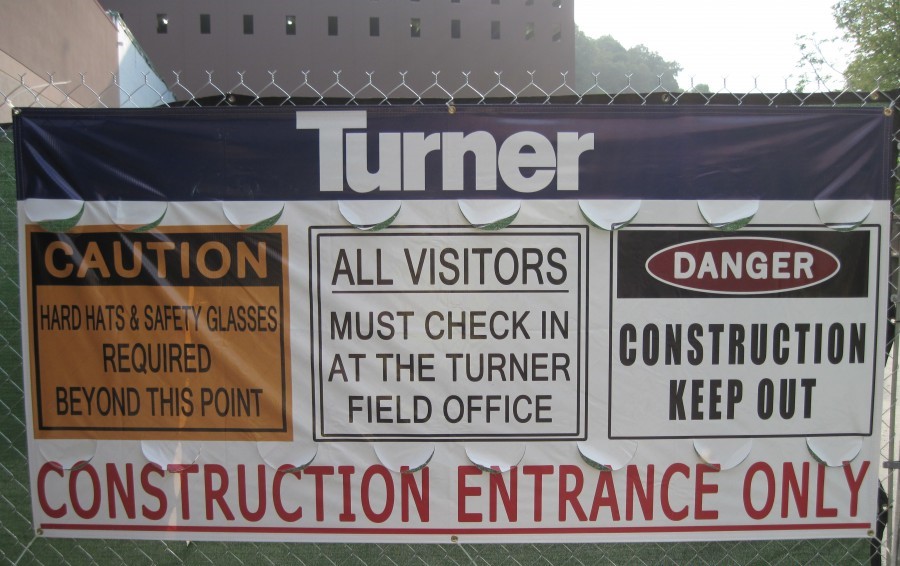
Beyond the marketing banners, a working Atlanta job site needs a substantial amount of regulatory and wayfinding print. Site safety placards, OSHA notices, contractor information, parking directions for subcontractors, and visitor check-in signage all fall into our wide-format queue at some point.
None of this is glamorous, but it keeps the project compliant and the site organized. We have printed full safety signage packages for general contractors in a single day when an inspector flagged missing placards, and we keep templates on file for the firms we work with regularly so reorders move fast.
Neighborhood Goodwill
Construction is loud, dusty, and disruptive. The developers who navigate this best tend to treat their fence banners as a communication tool with the surrounding neighborhood, not just a marketing surface. We have printed banners that thank residents for their patience, explain what is being built and why, share construction milestones, and direct neighbors to a project liaison for questions.
This kind of signage does not directly sell square footage, but it changes the tone of community meetings and the comments at the neighborhood association. For projects in close-knit Atlanta neighborhoods like Cabbagetown, Inman Park, or Grant Park, that goodwill matters when it comes time for the next zoning variance.
What We Need From the Project Team
To produce a good site banner package, we need three things from the developer or general contractor. Final renderings at the highest resolution available, ideally from the architectural team. Brand assets for the developer, the building, and any anchor tenants worth featuring. And accurate fence dimensions, because measuring a long run of construction fence by eye is how panels end up six inches short.
Once those are in hand, our team can turn a complete site signage package in the kind of timeline a construction schedule actually allows. The build is going to happen with or without signage on the fence. The question is whether those twelve months of construction work for the project or against it.
Ready to Get Started?
Contact Extreme Color today for vehicle wraps, signs, banners, and more.
Get a Free Quote