

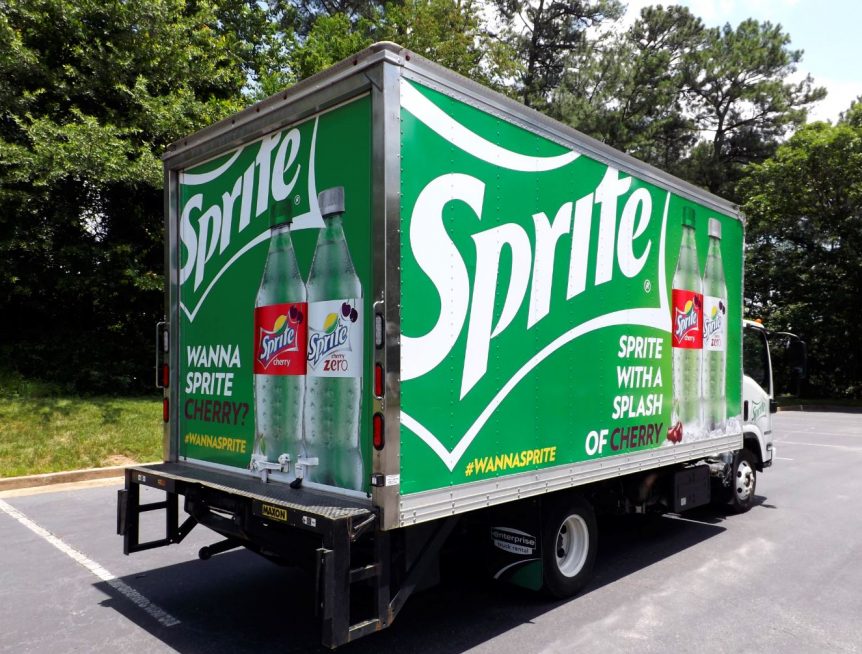
The Most Underused Ad Surface in Atlanta
A box truck running a delivery route through Atlanta passes more eyeballs in a day than most local billboards. Buckhead in the morning, downtown at lunch, the OTP suburbs in the afternoon, then back to the warehouse on I-285 at rush hour. That truck is in front of stopped traffic for hours every day, and most of them are rolling around as blank white rectangles.
Our shop wraps a steady stream of box trucks for moving companies, courier services, food distributors, and last-mile logistics operators based in metro Atlanta. The reason this keeps growing is simple. A wrap costs less than three months of equivalent digital ad spend, and it works every day the truck is on the road for the next five to seven years.
What a Box Truck Wrap Is Actually Doing for You
There are three jobs a good box truck wrap performs simultaneously, and the design has to serve all of them.
The first is brand recognition. When a homeowner sees the same moving truck parked on their street four times in a quarter, your brand is the one they call when their lease ends. Repetition across a service area builds preference faster than any single billboard ever will.
The second is direct response. The phone number, the website, and the QR code on the back panel are what convert the stopped commuter behind you into a lead. We see truck wraps generate measurable inbound calls for clients who track sources, and the back of the truck is the highest-converting surface because that is what drivers stare at in traffic.
The third is recruiting. In a tight labor market, drivers and movers notice clean, well-branded fleets and apply to them. A scuffed white truck with a magnetic door sign signals one kind of operation. A fully wrapped truck signals another.
Design Choices That Hold Up at Highway Speed
Box truck wraps fail when they are designed like business cards. Tiny logos, fine print, busy patterns, and pastel color palettes might look good on a screen, but at sixty miles per hour on the Connector, they read as visual noise.
Our design team works from a few principles that we have validated across hundreds of fleet installs. High contrast between the background and the type, because that is what survives bright sun and shadow. Logos sized large enough to read from three lanes over. A single primary call to action, usually a short phone number or a memorable domain, instead of three competing ones. And imagery, when used, that is bold and graphic rather than photographic, because photo detail disappears at distance.
We also leave deliberate breathing room. A box truck wrap that is one hundred percent covered in graphic ends up looking smaller than one with strong, simple shapes and intentional negative space. Restraint reads as professional.
The Materials That Survive Atlanta Weather
Atlanta does not have the brutal road salt of the Northeast or the relentless coastal sun of South Florida, but the combination of UV exposure, summer heat, and sudden thunderstorms is harder on vinyl than most clients expect. Box trucks parked outside overnight, which is most of them, take a daily beating.
We install with cast vinyl films for full wraps because the conformability matters on box truck rivets, seams, and door channels, and because the warranty period on cast films matches the typical service life of the truck. Cheaper calendared films save money on the install and cost it back in two to three years when the edges start lifting around the cargo door.
For the laminate, we use a UV-protective overlaminate on every full wrap. This is the layer that takes the brunt of the sun and lets the printed color underneath hold up. Skipping the laminate is one of the most common ways a budget wrap shop will undercut the price, and it shows after the first hot Atlanta summer.
Partial Wraps and Decal Packages
Not every operator needs a full wrap. For fleets with strong existing colors, or for short-term promotions, we frequently install partial wraps and large-format decal packages instead. A partial wrap on a white truck might cover the back roll-up door fully, run a graphic band along the sides, and add door decals on the cab, all for a fraction of the full wrap cost.
Partial wraps make particular sense for new fleets still proving out their branding, for trucks nearing the end of their service life where a full wrap would not amortize, and for seasonal campaigns where a few months of visibility is the goal.
Installation and Downtime
Logistics operators care about downtime more than they care about the install cost, and rightly so. A box truck off the road is revenue lost. Our shop schedules fleet wraps around the operator's calendar, and for larger fleets we will stagger installs across nights and weekends to keep the routes covered.
A full box truck wrap typically takes two to three days in the shop, depending on the truck size and how prepped the surface is. For high-volume fleets, we have built relationships where the operator drops off a truck on Friday evening and picks it up wrapped on Monday morning, with zero impact on the delivery schedule.
Maintenance That Extends the Wrap's Life
A wrap is not maintenance-free, but it is close. The biggest factor in how long a box truck wrap looks good is how it is washed. Automated truck washes with stiff brushes will degrade the laminate faster than hand washing with mild soap. We give every fleet client a one-page maintenance guide at delivery, and the operators who follow it get an extra year or two out of their wraps.
For fleets that take their trucks through the high-pressure washes that are common in Atlanta industrial parks, we recommend keeping the spray angle off the seams and edges, and we are happy to do edge touchups if a panel starts to lift. A wrap that gets routine attention will look retail-fresh for years on routes that pound a lot less branded fleets into oblivion.
The Conversation Worth Having
If you are running more than a handful of box trucks out of an Atlanta warehouse and they are not wrapped, the calculation is worth running once. Most operators we sit down with are surprised by how favorably a wrap compares to whatever they are currently spending on local advertising. Our team can walk through the design, materials, and schedule in a single shop visit. The trucks are already paying for the gas to drive past potential customers. They might as well be selling on the way.
Ready to Get Started?
Contact Extreme Color today for vehicle wraps, signs, banners, and more.
Get a Free Quote