

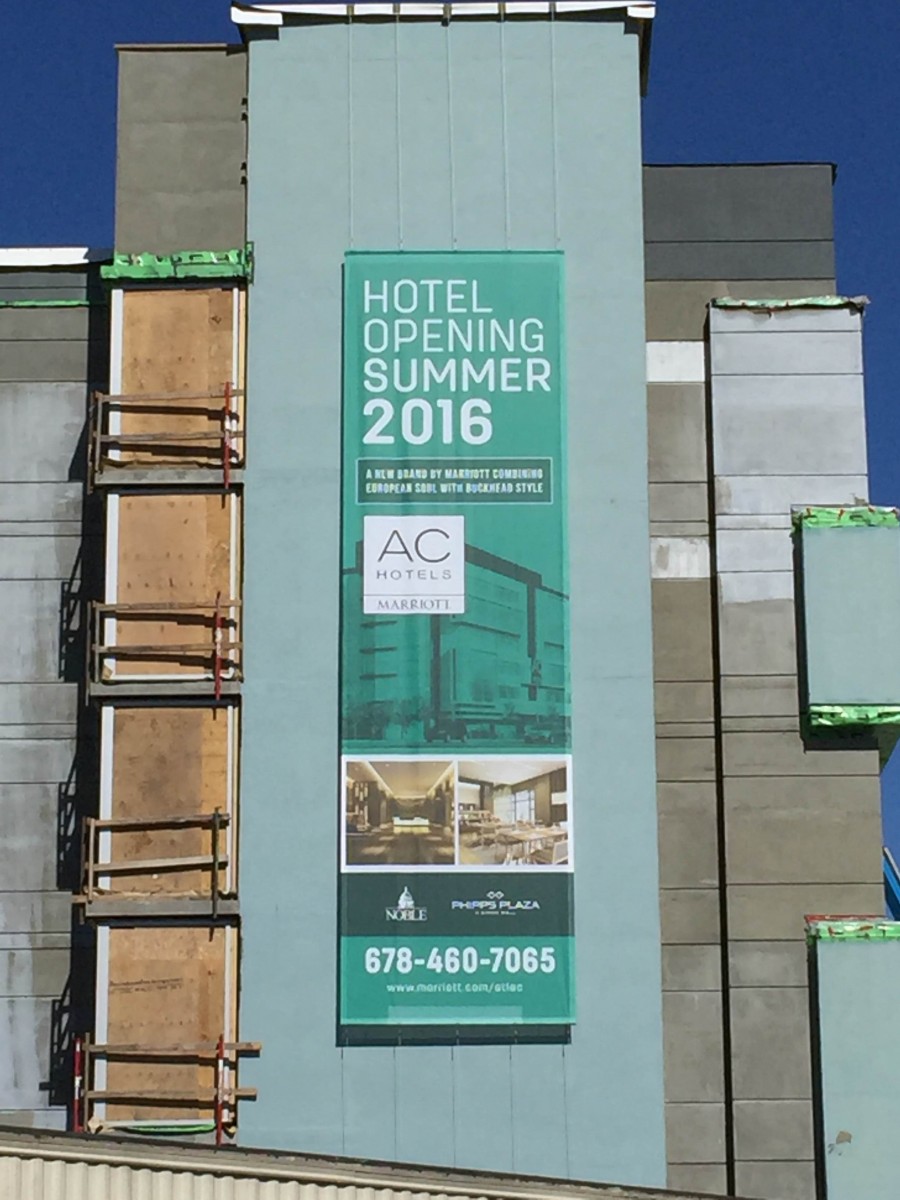
A Great Banner in a Bad Spot Is a Wasted Banner
We see it all the time. A business invests in a beautiful, full-color vinyl banner — sharp graphics, bold text, clear call to action — and then hangs it somewhere nobody can actually read it. Behind a tree. Above a doorway where people are already inside. Facing a parking lot that only gets traffic on weekends. The banner itself is fine. The placement killed it.
Banner placement is one of those things that seems obvious until you actually have to do it. Where you hang a banner, how high it sits, what angle it faces, and how much time people have to read it — these decisions determine whether your banner works as a marketing tool or just becomes background noise. Here in Atlanta, where we print banners for everything from grand openings on Peachtree Street to job site fencing in Midtown, we've learned a few things about what makes placement work.
Start With the Viewer, Not the Building
The most common mistake is choosing a banner location based on where it's convenient to hang, rather than where people will actually see it. Before you pick a spot, think about who your audience is and how they're moving through the space.
Are they driving past at 40 miles per hour on a busy road? Then your banner needs to face oncoming traffic, sit at eye level for drivers (roughly 4 to 6 feet off the ground), and use large enough text to read in about three seconds. That means your key message — your business name, a phone number, or a single offer — needs to be readable from at least 100 feet away.
Are they walking through a shopping center or past your storefront? Then placement can be lower, text can be smaller, and you have more room for detail. Pedestrians give you five to ten seconds of attention if the banner catches their eye. That's enough for a short message, a QR code, or event details.
Are they at an event — a festival, a trade show, a community market? Then you're competing with dozens of other visual distractions. Height helps here. So does positioning near entrances, exits, or food lines where people naturally pause and look around.
Height and Angle: The Two Things Most People Get Wrong
Hanging a banner too high is probably the single most common placement mistake. It's understandable — people think higher means more visible. But a banner mounted 15 feet up on a building face is nearly invisible to someone standing 20 feet away on the sidewalk. They'd have to crane their neck to read it, and most people just won't.
For storefront banners and ground-level signage, the sweet spot is between 4 and 8 feet from the ground. This puts your message at natural eye level for both pedestrians and drivers. If you're hanging a banner on a fence or railing — common for construction sites, athletic fields, and outdoor events — the bottom edge of the banner should sit at about 3 feet, which keeps it readable for people standing nearby and visible from a distance.
Angle matters just as much. A banner that faces a wall or runs parallel to the road does nothing for passing traffic. You want your banner perpendicular to the main flow of movement whenever possible. If your building faces a busy road, hang the banner on the road-facing side, not on the side that faces your parking lot. If you're at a corner lot — and Atlanta has plenty of those — consider angling the banner at 45 degrees to catch traffic from both directions.
Outdoor Banners: Fighting the Elements
Atlanta weather is a factor in every outdoor banner decision. Between the summer heat, afternoon thunderstorms, and the occasional winter ice, your banner needs to survive real conditions. But survival isn't just about material — it's about how and where the banner is mounted.
Wind is the biggest enemy. A banner that's stretched tight across a solid surface will catch wind like a sail. If you're mounting a large banner in an exposed location — along a highway, on scaffolding, or across a building face — wind slits (small cuts in the vinyl) or mesh banner material can reduce wind load dramatically and keep your banner from tearing or pulling away from its mounts.
Sun exposure matters too. A south-facing or west-facing banner in Atlanta will take serious UV punishment from May through September. High-quality UV-resistant inks and lamination help, but placement also plays a role. If you can position a banner under a slight overhang or in partial shade during peak sun hours, the colors will hold longer. For temporary banners that only need to last a few weeks — event promotions, seasonal sales — this matters less. For banners that need to hold up for months, think about sun angle when choosing your spot.
Event Banners: Location Is Competitive Real Estate
If you're setting up banners at a trade show, festival, or community event in the Atlanta area, placement becomes a competitive exercise. Everyone else has banners too. The businesses that get the most attention are the ones that think strategically about where eyes naturally go.
Entrances and registration areas are prime real estate. People are standing still, looking around, and orienting themselves. A banner here gets sustained attention. Exits work well too — people leaving an event are often still in a browsing mindset and more likely to notice a banner they might have walked past on the way in.
Food and beverage areas are another strong placement zone. People in line have nothing to do but look around. If you can position a banner within the sightline of a food truck line or a drink station, you'll get more eyeball time than almost anywhere else on the grounds.
Avoid placing event banners in transition zones — the areas people are just walking through to get somewhere else. These are the spots between booths, along walkways, or near restrooms. People are moving with purpose in these areas and tend to look straight ahead.
Construction and Job Site Banners
For contractors, developers, and property managers around Atlanta, job site banners serve a dual purpose: they advertise the business doing the work and they announce what's coming to that location. The placement strategy is different from retail or event banners because the audience is almost entirely vehicle traffic.
The banner should face the road with the highest traffic count. If the site is on a corner, prioritize the busier street. Mount it on the perimeter fence at driver eye level — 4 to 6 feet from the ground. Keep the message extremely simple: company name, phone number, and maybe one line about what's being built. At 35 to 45 miles per hour, nobody is reading your list of services.
Size matters here more than anywhere else. A 3-by-6-foot banner on a construction fence gets lost. For roadside job sites, we typically recommend at least 4-by-8 feet, and often larger. The banner needs to be readable from across multiple lanes of traffic and at speed.
A Few Quick Rules of Thumb
After years of printing and seeing banners go up across the Atlanta metro area, here are the placement principles we come back to again and again. Face the traffic, not the building. Hang at eye level for your audience, whether they're walking or driving. Keep text large enough to read in three seconds from the farthest reasonable viewing distance. Use wind-rated materials and mounting hardware for any outdoor installation. And when in doubt, step back — literally walk or drive past the planned location — and ask yourself whether you'd notice the banner if you weren't looking for it.
The banner itself is only half the job. Where it goes is the other half. Getting both right is what turns a piece of printed vinyl into something that actually drives business.
Ready to Get Started?
Contact Extreme Color today for vehicle wraps, signs, banners, and more.
Get a Free Quote