

Your Sign Doesn't Clock Out at Sunset — Neither Should Your Graphics
Most printed graphics are designed to look good in daylight. But what happens when the sun goes down? If your business is open evenings, sits on a busy corridor with nighttime traffic, or simply wants to be visible around the clock, standard prints aren't enough. That's where backlit graphics come in — prints specifically engineered to look their best when light passes through them from behind.
Walk down any commercial stretch in Atlanta after dark — Peachtree Street through Midtown, the Buford Highway restaurant corridor, or the shopping centers along Holcomb Bridge Road in Roswell — and the businesses that stand out are the ones with illuminated signage. Backlit graphics take that a step further by turning those illuminated surfaces into full-color, high-resolution brand displays.
How Backlit Printing Works
Backlit graphics are printed on translucent materials — usually backlit film or backlit fabric — that allow light to pass through while maintaining image clarity and color vibrancy. When mounted in a light box or illuminated frame, the light source behind the graphic makes the colors appear to glow from within.
The difference between a standard print and a backlit print is significant. A regular vinyl banner or poster is designed to reflect light off its surface. A backlit graphic is designed to transmit light through its surface. The inks, the media, and the color profiles are all different. You can't just take a regular print and stick it in a light box — the colors will look washed out and the image will appear dull and uneven.
Proper backlit printing uses higher ink density to maintain color saturation when light passes through. The translucent film is calibrated so the right amount of light transmits through the graphic without blowing out the colors or creating hot spots. When it's done right, the result is a graphic that actually looks more vivid at night than it does during the day.
Where Backlit Graphics Work Best
The most common application is light box signage — those slim, illuminated sign cabinets you see on storefronts, in shopping centers, and at transit stops. A light box with a high-quality backlit print is one of the most effective ways to maintain brand visibility after business hours. Even when you're closed, your sign is still working.
Menu boards at restaurants and quick-service spots are another natural fit. Drive through any commercial area in metro Atlanta — Chamblee, Doraville, Kennesaw — and you'll see illuminated menu boards at fast-casual restaurants. A backlit printed menu board with professional photography of your food looks dramatically better than a board with stick-on letters or a basic printed insert.
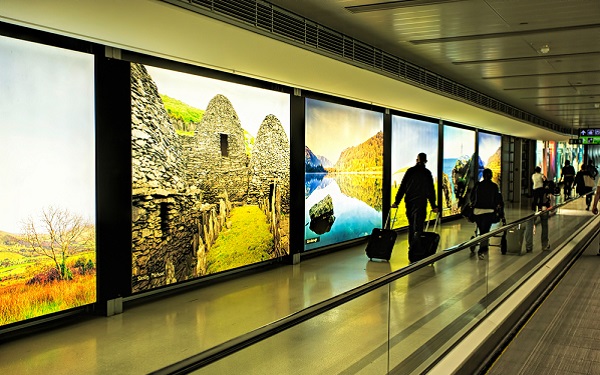
Interior applications are growing fast too. Retail stores, medical offices, corporate lobbies, and hospitality spaces use backlit graphics as design elements. A backlit feature wall in a hotel lobby or a series of illuminated panels in a retail environment creates a visual experience that flat prints simply can't match. The light draws the eye and creates a sense of depth and quality.
Trade show and event displays have also embraced backlit graphics. Illuminated fabric displays create a premium booth presence that stands out on a crowded show floor at the Georgia World Congress Center or the Cobb Galleria Centre. When every booth around you is using standard printed banners, a backlit display commands attention.
Light Boxes: Choosing the Right Hardware
The light box itself matters as much as the graphic inside it. Modern LED light boxes are slim, energy-efficient, and produce even illumination across the entire face of the sign. Older fluorescent light boxes often create uneven lighting — bright spots near the tubes and dim areas in between. If you're still running fluorescent light boxes, upgrading to LED panels dramatically improves how your graphics look.
For exterior applications, the light box needs to be weather-rated. Atlanta's climate throws everything at outdoor signage — intense UV in summer, heavy rain, and occasional freezing temperatures in winter. An exterior-rated light box with proper sealing keeps moisture out and your graphics looking clean.
Snap-frame light boxes have become popular for applications where you need to change graphics frequently. The frame snaps open, you swap the print, and snap it closed. It's a simple system that makes seasonal promotions, rotating product features, or updated pricing easy to manage without tools or professional installation every time.
Fabric vs. Film: Picking the Right Material
Backlit graphics come in two primary material categories: film and fabric. Each has its strengths.
Backlit film is the traditional choice. It's a smooth, rigid translucent material that produces sharp images with excellent color accuracy. Film works well in standard light box frames and is the go-to for applications where image sharpness is the priority — think product photography, detailed brand graphics, or any application where fine text needs to be readable.
Backlit fabric has gained ground significantly in recent years. Printed on dye-sublimation printers and stretched over frames, backlit fabric produces a soft, even glow that's visually striking. The fabric eliminates any risk of Newton rings — those rainbow-colored interference patterns that can sometimes appear on film when it sits close to the light source. Fabric is also lighter, easier to ship, and wrinkle-resistant, making it ideal for trade shows and installations where the graphic needs to travel.
For most storefront and permanent interior applications, film remains the standard. For trade shows, pop-up retail, and large-scale feature walls, fabric is often the better choice.
Design Considerations for Backlit Graphics
Designing for backlit is different from designing for standard prints, and getting it right matters. Colors behave differently when light passes through them versus reflecting off them. Reds and oranges tend to get more intense. Dark backgrounds can look uneven if the light box has any inconsistencies. White areas glow brightly and draw the eye.
The best backlit designs use this to their advantage. Bold, saturated colors pop beautifully in backlit applications. High-contrast layouts — dark text on bright backgrounds, or vivid images against clean white space — read clearly and look dramatic. Photographic images with rich color work especially well.
What to avoid: large areas of very dark or black background, which can reveal lighting inconsistencies; extremely fine text, which can get lost in the glow; and designs that rely heavily on subtle color gradients, which may shift when backlit. Work with your printer to proof colors specifically for backlit output rather than relying on how the design looks on a monitor.
The Night Advantage
There's a psychological element to illuminated signage that's worth considering. After dark, an illuminated sign signals that a business is active, professional, and established. It creates a sense of safety and invitation. A dark storefront with no illuminated signage looks closed — even if you're open. A well-lit backlit sign says "we're here, come on in."
For businesses along Atlanta's busy nighttime corridors — Ponce de Leon Avenue, North Highland Avenue, Edgewood Avenue — that evening presence is critical. You're competing for attention with restaurants, bars, and entertainment venues that are all lit up and active. Backlit graphics give you a way to stay in that visual conversation.
Making Backlit Work for Your Business
Whether you're upgrading existing light box signage, adding illuminated displays inside your space, or building a trade show booth that needs to stand out, backlit graphics deliver a level of visual impact that standard printing can't touch. The key is matching the right material and hardware to your specific application — and working with a printer that understands the technical differences between backlit and standard output.
If you've been running the same faded insert in a light box on your storefront for years, a fresh backlit print is one of the fastest ways to upgrade your business's appearance. The hardware is already there — you just need graphics that are designed and printed to make the most of it.
Ready to Get Started?
Contact Extreme Color today for vehicle wraps, signs, banners, and more.
Get a Free Quote