

Glass Buildings Have a Problem Nobody Talks About
If you work in or manage a commercial building in Atlanta with large glass facades — and that describes a huge percentage of office space from Midtown to Buckhead to the Perimeter — you've probably seen it happen. A bird hits the glass. Sometimes it flies away stunned. Often it doesn't. It's an unsettling thing to witness, and it's happening far more frequently than most people realize.
Bird collisions with glass are one of the leading causes of bird mortality in North America. Estimates put the number at hundreds of millions of birds per year in the U.S. alone. The problem isn't that birds are careless — it's that glass is invisible to them. They see the sky reflected in the surface and fly straight into what they perceive as open air. Modern architecture's love of floor-to-ceiling glass has made this problem dramatically worse over the past few decades.
Why Standard Glass Is Invisible to Birds
Birds don't process glass the way humans do. We understand that a reflective surface is a barrier. Birds see reflections of sky, trees, and clouds and interpret them as a continuation of their flight path. At night, interior lighting draws migratory birds toward glass buildings like moths to a flame — a phenomenon that's particularly relevant in Atlanta, which sits on a major migratory flyway.
The most dangerous glass surfaces are those with high reflectivity, those adjacent to landscaping or water features that attract birds, and those in buildings near parks and green corridors. In Atlanta, buildings along the Chattahoochee River corridor, properties near Piedmont Park, and offices bordering any of the city's extensive tree canopy are especially prone to bird strikes.
It's not just a wildlife issue. Dead and injured birds at building entrances create an unpleasant experience for tenants and visitors. Property managers in Class A office space don't want to deal with daily bird removal. And increasingly, building standards and municipal codes are starting to require bird-safe design features on new construction and major renovations.
How Anti-Bird Strike Film Works
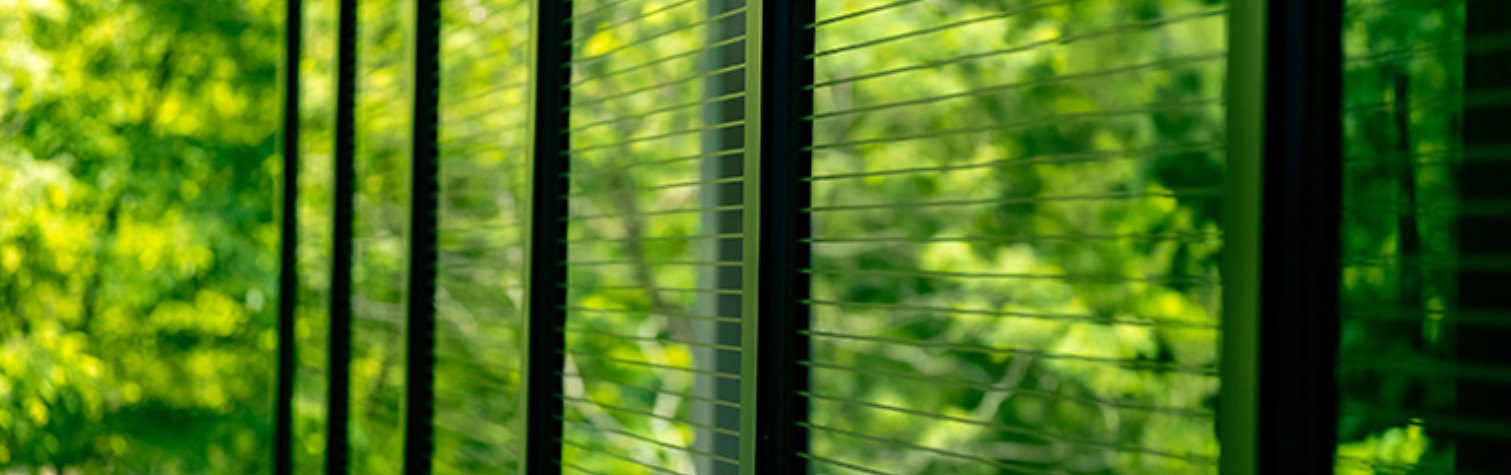
Anti-bird strike window film addresses the problem by making glass visible to birds without significantly changing how it looks to humans. The most common approach uses a pattern of dots, lines, or other visual markers applied to the exterior surface of the glass. These patterns break up the reflection that confuses birds, signaling that the surface is solid.
The science is well-established. Birds can detect patterns at spacings of about 2 inches by 2 inches or smaller. Films with dot patterns at this density effectively warn birds away while remaining subtle to the human eye from normal viewing distances. From inside the building, the pattern is barely noticeable — certainly less intrusive than blinds or curtains.
The films themselves are durable exterior-grade materials designed to withstand Atlanta's climate — summer UV, heavy rain, occasional ice, and temperature swings from the 90s to the 20s across the year. Once applied, they require no maintenance beyond normal window cleaning and typically last five to seven years before needing replacement.
Types of Bird-Safe Film Patterns
Not all anti-bird strike films look the same, and the choice of pattern affects both effectiveness and aesthetics. The most common options include uniform dot patterns, where evenly spaced small dots create a consistent visual barrier across the glass. These are the most proven effective and the most widely specified by architects and building consultants.
Linear patterns — horizontal or vertical lines at close spacing — offer an alternative aesthetic. They can create a more architectural look that complements certain building styles, particularly modern designs with clean horizontal lines. The key is maintaining a density that birds can detect, typically lines spaced no more than 2 inches apart.
Custom-printed films can incorporate decorative or branded patterns that serve double duty — bird safety and visual design. A building owner in Marietta or Kennesaw who needs bird protection on a ground-floor glass facade could choose a patterned film that adds visual interest to the streetscape while solving the collision problem. The film effectively becomes a design element rather than a purely functional retrofit.
Frosted bands and gradient patterns are another approach. A frosted film band across a critical strike zone — typically the lower 12 feet of a glass facade where most collisions occur — creates a visible barrier while allowing clear glass above for views and daylight. This approach works well for mixed-use buildings where ground-floor retail wants some visibility but upper floors need protection.
Where Bird Strike Film Makes the Biggest Impact
Not every window on a building needs anti-bird strike treatment. Targeting the highest-risk surfaces gives you the most benefit for the investment. Glass that reflects vegetation — lobby atriums with interior plants visible from outside, windows facing landscaped courtyards, and facades adjacent to tree lines — should be top priority.
Ground-level and lower-floor glass is statistically more dangerous than upper-floor windows, simply because more birds fly at lower altitudes during daily activity. Skywalks and glass connectors between buildings are especially hazardous because birds see through them to the sky on the other side. Glass railings on balconies and terraces are another hot spot.
For Atlanta properties, seasonal timing matters too. Spring and fall migration periods bring the highest risk, as millions of birds pass through the region heading to and from breeding grounds. Buildings near major green spaces — the BeltLine corridor, Chastain Park, the Chattahoochee River National Recreation Area — see higher collision rates during these windows.
The Regulatory Landscape
Bird-safe building design is no longer a fringe concern. Cities across the country have adopted or are considering bird-safe glass requirements for new construction. While Atlanta hasn't implemented a comprehensive bird-safe building code as of this writing, the trend is clearly moving in that direction. Several major green building certification programs — including LEED — now award credits for bird collision deterrence measures.
For building owners and property managers, getting ahead of potential requirements makes practical sense. Retrofitting bird-safe film is straightforward and relatively inexpensive compared to replacing glass. If codes do change, buildings with existing bird-safe treatments are already compliant. And from a corporate social responsibility standpoint, addressing bird safety proactively is an easy win that resonates with environmentally conscious tenants.
Installation and Practical Considerations
Anti-bird strike film is applied to the exterior surface of the glass, which is important — the pattern needs to be visible on the outside face to break up reflections. This means installation requires exterior access, which on multi-story buildings may involve lifts or swing stages. For ground-floor and low-rise applications, installation is straightforward.
The film is compatible with most glass types, including tempered, laminated, and insulated glass units. It can be applied over existing window films, though the installer needs to assess compatibility. For buildings that already have solar control or security film on the interior surface, adding bird-safe film to the exterior is a complementary upgrade that addresses a different problem with the same glass.
If you manage commercial property in the Atlanta metro area and bird strikes are an ongoing issue, anti-bird strike window film is one of the most practical and cost-effective solutions available. It protects wildlife, improves the building experience for occupants, and positions the property well for evolving building standards.
Ready to Get Started?
Contact Extreme Color today for vehicle wraps, signs, banners, and more.
Get a Free Quote